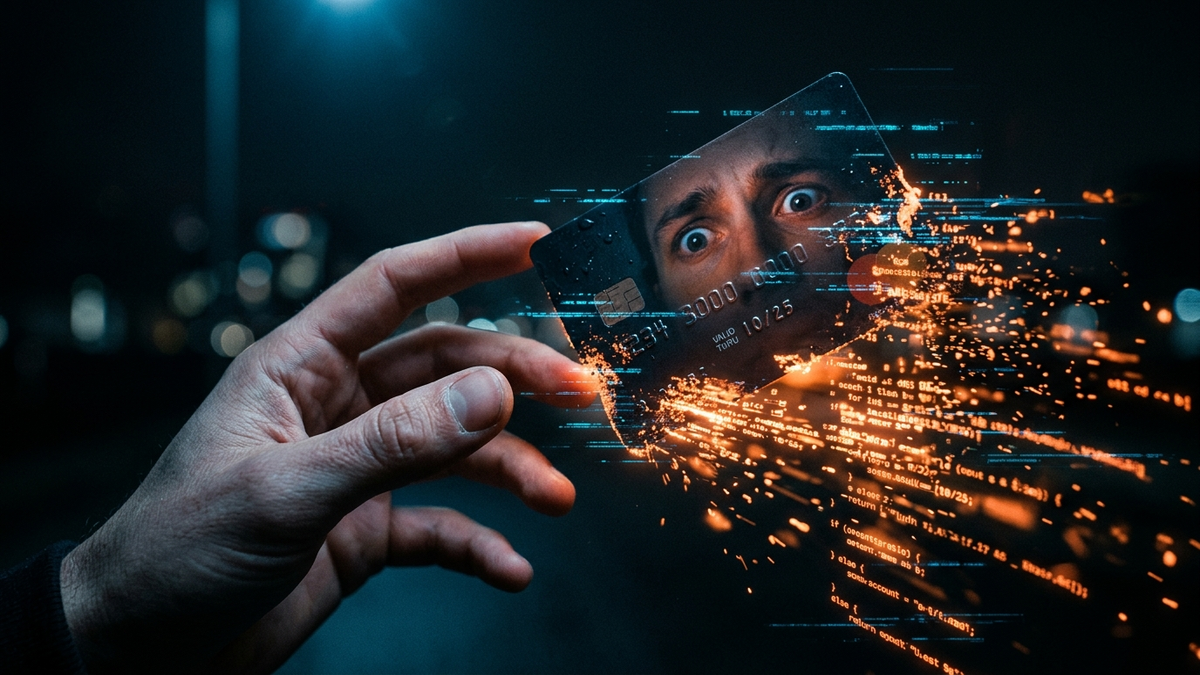
10 Signs an Online Store is Fake: Don't Enter Your Credit Card Yet
Quick Answer (TL;DR)
- Check the URL: Look for misspellings, weird endings like .xyz, and a recent creation date using a WHOIS lookup. If the domain name feels off, it is.
- Insist on Secure Payments: A padlock (HTTPS) is the bare minimum. If the only payment options are wire transfer, crypto, or Zelle, it's a scam. Stick to credit cards or PayPal Goods & Services for their fraud protection.
- Trust Your Gut on Deals & Design: If a deal seems impossible (90% off a new iPhone) or the site is full of typos, low-quality images, and has no real contact info, slam the laptop shut. Real businesses don't operate like that.
Introduction: The Digital Wild West is Full of Traps
Alright, let's have a frank conversation. You've found it: the perfect item, at a price that seems almost criminal. Your heart is racing, your finger is hovering over the 'Buy Now' button, and you're already imagining it arriving at your door. Hold on. Before you punch in those 16 digits, you need to stop and think like a sysadmin who's seen it all. I've spent 15 years cleaning up the digital wreckage left behind by these scam sites. It's not just about losing $50 on a pair of sneakers that never show up; it's about your credit card number being sold on the dark web, your identity being stolen, and a months-long nightmare of phone calls to banks and credit bureaus.
These fake stores are not run by amateurs in their mom's basement anymore. They're sophisticated, automated, and deployed by the thousands every single day. They use social media ads to target you with surgical precision, preying on your desires and your search history. This guide is your body armor. It's the pre-flight checklist I run through before I ever consider buying from an unknown site. We're going to dissect these scam operations piece by piece, so you can spot the red flags from a mile away and keep your financial data locked down tight.
1. The Domain Name and URL are Just... Wrong
The very first thing you need to inspect is the digital address of the store—the URL in your browser's address bar. This is the equivalent of checking the street address of a physical store. If it's located in a dark, unmarked alley, you wouldn't go in. The same logic applies here. Scammers can't get the official domain name of a brand like Nike.com, so they create clever, deceptive fakes designed to trick your brain when you're moving too fast. They rely on you not paying close attention to the details.
One of the most common tricks is called typosquatting. This involves registering domains with slight misspellings of popular brands. For example, you might see Amaz0n-deals.com (using a zero instead of an 'o') or Nlke-outlet.store (transposing the 'i' and 'k'). Another tactic is using the brand name but adding generic words and a strange ending, like Official-Michael-Kors.xyz or RayBan-Discount.shop. Real brands rarely, if ever, operate their main store on these bizarre Top-Level Domains (TLDs). While domains like .shop or .store are becoming more common, a major international brand will almost always use a simple .com. If you see a TLD like .xyz, .top, .buzz, .club, or .live for a supposed major retailer, your alarm bells should be screaming.
So, how do you verify this? Never, ever click on links from social media ads or unsolicited emails to get to a store. These can be easily manipulated. Always open a new tab and type the store's name into a search engine yourself, then click the link from the official search results. Even better, type the domain you think is correct directly into the address bar. The most powerful tool in your arsenal, however, is a WHOIS lookup. Just search for a "WHOIS tool" and enter the domain name. It will tell you who registered the domain and, most importantly, when it was registered. If a site claiming to be a massive retailer was created three weeks ago, it's a 100% guaranteed scam. Legitimate businesses have domains that are years, if not decades, old.
💡 Expert IT Tip: Stop playing defense and start playing offense. Use a DNS filtering service on your home network. Services like Quad9 (9.9.9.9) or Cloudflare for Families (1.1.1.3) are free and easy to set up in your router. Think of DNS as the internet's phone book; it turns a domain name into an IP address. These specific services maintain a real-time blocklist of known malicious and fraudulent domains. If you accidentally try to visit one of these scam sites, the DNS service will simply refuse to connect you, showing you an error page instead. It's like having an automated security guard for every device on your Wi-Fi.
2. The "Padlock" is Missing, Broken, or Misleading
Let's talk about that little padlock icon you see next to the URL in your browser. This signifies that the site is using HTTPS (Hypertext Transfer Protocol Secure). I'll spare you the deep technical jargon. Just think of it like this: a regular HTTP site is like sending a postcard. Anyone who handles it—your ISP, a hacker on the same coffee shop Wi-Fi—can read everything on it. HTTPS is like taking that same message, putting it in a locked metal briefcase, and sending it via a trusted courier. The padlock means the connection between your browser and the website's server is encrypted, so no one can eavesdrop on the data being sent, including your credit card number.
If a store's website does not have this padlock and the URL starts with http:// instead of https://, you should not just walk away; you should run. In 2024, there is zero excuse for any website that asks for personal or payment information to not use HTTPS. Your browser will likely even throw up a massive, full-page warning that says "Your connection is not private." Listen to your browser. It knows what it's talking about. Clicking "Proceed anyway" is the digital equivalent of ignoring a "Danger: Bridge Out" sign.
Now for the brutally honest part that most guides miss: the presence of a padlock is NOT a guarantee that the site is legitimate. It has become incredibly easy and free for anyone, including scammers, to get a basic SSL certificate (the technology that enables HTTPS). All the padlock confirms is that the data you send is encrypted. It says nothing about the integrity or honesty of the person on the other end who is decrypting it. It's like knowing the armored truck made it to the destination, but the destination is a thief's warehouse. So, while the *absence* of a padlock is a deal-breaker, its *presence* is merely the first checkpoint. You have to go a step further. Click on the padlock icon. A little window will pop up. Look for "Certificate is valid." Click to view the details. A legitimate, established e-commerce site will have a certificate issued to their legal company name, like "Amazon.com, Inc." or "Apple Inc." A scam site will often have a certificate issued by a free provider like "Let's Encrypt" with no verifiable company information attached. It's a subtle but powerful clue.
3. The Deals Are Literally Unbelievable
This is the oldest trick in the book, and it works because it targets human emotion, not logic. Scammers know that the thrill of a "once-in-a-lifetime" deal can short-circuit our critical thinking. You see a brand new PlayStation 5 for $150, a pair of premium noise-canceling headphones that retail for $400 on sale for $79, or a luxury handbag priced at 90% off. Your rational brain knows it's impossible, but the emotional, hopeful part of you whispers, "But what if...?" Let me be crystal clear: you have not discovered a secret loophole in capitalism. You have discovered a trap.
Legitimate retailers operate on margins. They have costs: inventory, staff, marketing, rent. They simply cannot sell current, in-demand products for a fraction of their wholesale cost. A 20-30% discount during a major sale is normal. A 80-90% discount across the entire store on brand-new items is a giant, flashing, neon red flag. These prices are not designed to sell you a product; they are designed to harvest your credit card information. The ridiculously low price is the bait on the hook. Once they have your name, address, phone number, and credit card details, they've won. They can either charge your card for the fake item (and maybe a dozen other things) or sell your complete data package on the dark web for others to exploit.
To protect yourself, you must become a disciplined price-checker. Before you get excited, open a new tab and search for the exact same product on well-known, reputable sites like the official brand's website, Amazon, Best Buy, or Target. If the price on the site you're investigating is wildly out of line with all major retailers, it's a scam. Also, pay attention to the scammer's psychological tricks. They love to use high-pressure tactics like countdown timers ("Deal ends in 02:47!") or fake scarcity ("Only 3 left in stock! 25 people are viewing this now!"). These are designed to rush you into making a bad decision. A real deal will still be there in ten minutes. Use that time to perform your due diligence and check the other signs on this list. Never let a sense of urgency compromise your security.
Protect your identity and browse privately with Surfshark One - the all-in-one security suite.
GET 60% OFF SURFSHARK NOW4. The Website Design and Content are a Mess
Think about a major retailer like Apple, Home Depot, or Nordstrom. Their websites are pristine. They spend millions of dollars on professional photography, expert copywriting, and a seamless user interface. Their website is a core part of their brand identity. Now, look at the site you're on. Does it have that same level of polish? Or does it look like it was cobbled together in an afternoon?
Scammers operate on volume. They create hundreds of these sites using cheap templates, and they don't have the time or resources to perfect every detail. This sloppiness is a huge giveaway. Look for low-resolution or stolen images. Are the product photos grainy, blurry, or all different sizes and styles? Even worse, do you see watermarks from other websites on the pictures? Scammers will often just scrape images from legitimate sites, and sometimes they're too lazy to even crop out the original source's logo. This is a dead giveaway that they don't actually have the products in their possession.
Next, read the text. Read the product descriptions, the "About Us" page, and the promotional banners. Is the website riddled with atrocious grammar, spelling mistakes, and awkward phrasing? You might see things like "Hot Sellings For Mens Shoe" or "Quality Garanteed." This is a classic sign that the site was created by non-native English speakers using cheap, automated translation software. A professional company would never allow such sloppy copy on its public-facing storefront. The "About Us" page is another goldmine for spotting fakes. Real companies have a story, a mission, and a history. Scam sites will either have no "About Us" page at all, or it will be filled with generic, meaningless corporate jargon that could apply to any company on earth. Here's a pro tip: copy a full sentence from their "About Us" text, put it in quotes, and search for it on Google. You'll often find the exact same text on dozens of other scam sites, proving they're all part of the same lazy network.
5. Sketchy Payment Methods and No Real Reviews
Always scroll down to the bottom of the homepage and look for the payment logos. A legitimate store will proudly display logos for Visa, Mastercard, American Express, PayPal, Apple Pay, and other mainstream, trusted payment processors. They want to make it as easy and secure as possible for you to pay. Now, proceed to the checkout page. What are your actual options? This is where the mask often comes off.
A massive red flag is a site that advertises major credit card support but, when you get to the final payment screen, the *only* options available are irreversible and untraceable. These include wire transfers (like Western Union or MoneyGram), direct bank transfers, cryptocurrency (Bitcoin, Ethereum), or peer-to-peer payment apps like Zelle or Cash App. There is absolutely no legitimate reason for a retail store to demand payment this way. These methods are the equivalent of sending cash in an envelope. Once you send it, it's gone forever. There is no fraud protection, no chargeback mechanism, and no one to appeal to. If a site pushes you towards these methods, they are planning to take your money and disappear.
Another trick is the misuse of PayPal. They might offer PayPal, but when you select it, a note pops up asking you to send the payment using the "Friends and Family" option to avoid fees. Never do this. Sending money via "Friends and Family" explicitly voids PayPal's Purchase Protection. You are telling PayPal it's a gift, not a commercial transaction, and you forfeit all rights to file a dispute if the item never arrives. Always use the "Goods and Services" option. The small fee is what pays for your protection. If a seller insists on "Friends and Family," they are a scammer, period. Finally, look for reviews—but not on their own website. Of course the reviews on FakeStore.com will be five stars! They wrote them themselves. Use independent, third-party review sites like Trustpilot, Sitejabber, or the Better Business Bureau. Search for "[Store Name] + reviews" or "[Store Name] + scam." If you find nothing, or a flood of recent one-star reviews from angry customers, you have your answer.
💡 Expert IT Tip: Stop giving your real credit card number to every website on the internet. Use a virtual card service. Companies like Privacy.com (in the US) or built-in features from issuers like Capital One (Eno) and Citi allow you to generate a unique, "virtual" credit card number for every online store. You can set a spending limit on the card (e.g., lock it to the exact purchase amount) or even set it to be a single-use card that deactivates after one transaction. If the website turns out to be a scam or gets breached later, the thieves only have a useless, disposable number. Your real account remains completely untouched. It's the single best defense against your financial data being compromised online.
6. The "Fine Print" is Missing, Stolen, or Makes No Sense
No one enjoys reading the legal fine print, and scammers count on this. For any legitimate online business, pages like the Privacy Policy, Terms of Service, and Return/Shipping Policy are not just formalities; they are legally required documents that outline the contract between you and the seller. They are also complex and time-consuming to create. Scammers are lazy and often cut corners here, and this is where you can catch them.
First, check if these pages even exist. Scroll to the footer of the website—that's where the links are almost always located. If you can't find any links to a privacy policy or terms of service, the site is an immediate write-off. This isn't just unprofessional; it's a violation of data privacy laws like GDPR and CCPA in many parts of the world. A business that doesn't even bother with this basic legal requirement is not a real business. If the pages do exist, click on them. The next red flag is placeholder text. You might find pages full of "Lorem Ipsum" dummy text or generic templates that haven't been filled out. This shows the site was thrown together in a hurry from a cheap template without any attention to detail.
The most revealing trick is to look for stolen content. Scammers will often copy and paste the policies from a well-known, legitimate retailer but forget to change the details. It's surprisingly common to be browsing a sketchy gadget shop and read a privacy policy that says, "Welcome to Macy's! All customer data is handled by Macy's Inc." They simply did a find-and-replace and missed one. Use the same trick as before: copy a unique-sounding sentence from their Terms of Service, put it in quotes, and search for it. If you see it pop up on dozens of other unrelated, weird-looking online stores, you've uncovered a scam network that reuses the same template. Finally, actually read the return policy. Does it seem fair and realistic? Scam sites often have impossible return policies designed to prevent you from ever getting a refund, such as requiring you to ship the item back to China at your own exorbitant cost, charging a 50% "restocking fee," or giving you a 7-day return window that starts from the order date, not the delivery date. The fine print tells you everything about their true intentions.
Conclusion: Your Best Defense is Healthy Skepticism
The internet is not an inherently safe place. It's a tool, and like any tool, it can be used for good or for ill. The responsibility for protecting yourself falls squarely on your shoulders. The six signs we've covered—the sketchy URL, flawed security, impossible deals, sloppy design, risky payments, and missing legal text—are your field guide to spotting these digital predators. Think of it as a checklist. If a site fails even one of these tests, especially the big ones like payment methods or domain age, it's not worth the risk. Close the tab.
There will always be another sale. The product you want will be available elsewhere from a reputable source. The five minutes you spend doing this due diligence can save you from months of financial and emotional distress. The single most important takeaway is this: When in doubt, get out. Trust that nagging feeling in your gut. If something feels off, it almost certainly is. By adopting a mindset of healthy skepticism and verifying before you trust, you can navigate the world of e-commerce safely and confidently, ensuring your money and your data stay exactly where they belong: with you.
Don't wait for the headlines. Our Private Telegram Channel delivers real-time AI security updates and digital wealth strategies before they go viral. Stay protected. Stay ahead.
⚡ JOIN THE 1% NOW🧰 Try Our Free Tools & Calculators
No sign-up required. Instantly check risks, analyze AI text, or calculate your digital finances.