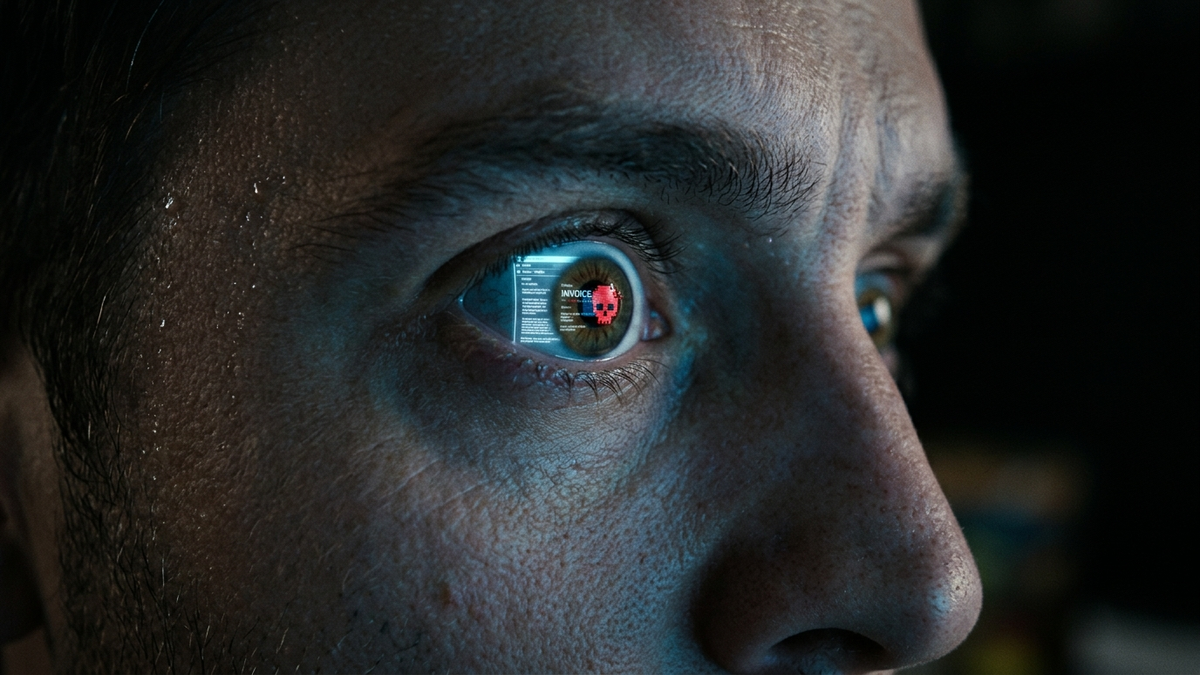
AI-Powered Phishing: Why Your Inbox is More Dangerous Than Ever
Quick Answer (TL;DR)
- AI creates flawless, hyper-personalized phishing emails by scraping your social media and company data, making them nearly impossible to spot with the naked eye.
- Attackers now use AI voice cloning and deepfake video for highly convincing "vishing" (voice phishing) and CEO fraud attacks that bypass simple suspicion.
- Your best defense is a "zero-trust" mindset: verify any urgent or unusual request out-of-band (e.g., a phone call to a known number), because visual and text-based proof can now be completely fabricated.
Introduction: The Game Has Changed, Permanently
Listen up. For 15 years, I’ve been on the front lines, and for most of that time, phishing emails were a joke. You could spot them from a mile away: the terrible grammar, the generic "Dear Customer" greeting, the obviously fake sender address. We taught people to look for these signs, and for a while, it worked. That era is over. Dead and buried.
The arrival of sophisticated, publicly available Artificial Intelligence has handed cybercriminals a weapon of unprecedented power. Think of it like this: old-school phishing was like a crook sending out a million identical, poorly photocopied flyers. AI-powered phishing is like that same crook hiring a million bespoke con artists, each one with a perfect, custom-tailored script designed specifically for their target. It's not just an evolution; it's a revolution in deception.
Your inbox is no longer just a communication tool. It's the primary battleground where attackers are deploying psychological warfare, crafted by machines that learn, adapt, and create convincing lies faster than any human ever could. This isn't about being "tech-savvy" anymore. This is about understanding that the very nature of trust and verification online has fundamentally broken. What you're about to read isn't fear-mongering; it's a field report from the new front line.
Section 1: What is AI-Phishing (And Why It's a Game-Changer)
Let's get straight to it. Traditional phishing was a numbers game based on volume and carelessness. An attacker would blast out a generic email about a "problem with your Netflix account" to millions, hoping a tiny fraction would be distracted enough to click. The emails were clumsy because they were written by non-native speakers or simply churned out from a template. They relied on you making a dumb mistake.
AI-powered phishing is the polar opposite. It's a precision strike. The AI, specifically a Large Language Model (LLM) similar to what powers ChatGPT, doesn't make spelling mistakes. It doesn't use awkward phrasing. In fact, it can be prompted to write in the exact tone of your CEO, your head of HR, or even a close colleague. It can analyze past emails from your company (if there's been a breach) or public communications to perfectly mimic the style, vocabulary, and common sign-offs. The result is an email that doesn't just look legitimate; it *feels* legitimate.
But the real game-changer is personalization at scale. An AI can be fed public information about you from LinkedIn, your company's "About Us" page, recent news articles, and your social media posts. It then weaves these details into the phishing email. Instead of "Dear Customer," it's "Hi John, hope you had a great time at the cybersecurity conference in Austin last week. Following up on our chat, could you please review this updated invoice?" The AI connects real-world events to its malicious request, crushing your natural suspicion. It's no longer a random email; it's a message that fits perfectly into the context of your life, making it devastatingly effective. This isn't just an email; it's a weaponized narrative.
The scale is terrifying. A human attacker might spend hours crafting one perfect spear-phishing email. An AI can generate ten thousand *unique*, highly personalized versions in a matter of minutes. Each one is a slightly different, tailored attack. This new reality overwhelms traditional spam filters, which are trained to look for mass-produced, identical emails. When every email is unique, the old defenses crumble. We've moved from fighting an army of identical robots to fighting a swarm of infinitely adaptable chameleons.
Section 2: The AI Phishing Toolkit: How They Build the Perfect Trap
To understand the threat, you need to look inside the attacker's toolbox. It’s no longer just a keyboard and a list of stolen email addresses. Today’s toolkit is a suite of powerful, often commercially available AI technologies repurposed for crime. The primary weapon is the Large Language Model (LLM). Attackers use uncensored or custom-trained LLMs to generate email copy that is not only grammatically perfect but also psychologically potent. They can instruct the AI to "write a highly urgent email from a CFO to a junior accountant requesting an immediate wire transfer for a time-sensitive M&A deal, using an authoritative but encouraging tone." The AI will deliver a masterpiece of social engineering in seconds.
Next in the toolkit is data scraping and synthesis. AI scripts are constantly crawling the web—LinkedIn, X (formerly Twitter), press releases, local news—to build a detailed profile on you and your colleagues. It knows your job title, who you report to, what projects you just announced, and even where you went on vacation. This isn't just data collection; it's intelligence gathering. The AI then synthesizes this data into the email's narrative. It can reference a real project code, a real colleague's name, or a real upcoming deadline to build an unshakeable foundation of credibility for its malicious request.
The most alarming tools are for audio and video generation. With just a few seconds of audio from a YouTube video or a company earnings call, AI voice-cloning tools can create a realistic audio message of your CEO asking you to "quickly handle something off-the-books." This is the evolution of vishing (voice phishing). Instead of a strange call from a call center, you get a voicemail that sounds exactly like your boss. Similarly, deepfake technology can create short video clips for high-stakes attacks. Imagine a video call where your boss appears for 30 seconds, says they're having connection issues, but asks you to urgently process an attached payment before they drop off. For many, that's all the proof they'd need. The lines between real and fake have been completely erased.
💡 Expert IT Tip: The bad guys are using "generative adversarial networks" (GANs) to test their own phishing emails. One AI generates the phish, and another AI, trained on security filters, tries to detect it. They run this cycle thousands of times, effectively teaching the phishing AI how to create emails that are specifically designed to bypass the security tools your company uses. It's an automated arms race happening in silicon before the attack ever reaches your inbox.Section 3: Spotting the Unspottable: Red Flags in the Age of AI
The old advice is dangerously outdated. Telling you to "check for spelling errors" is like telling you to look for a horse and buggy on the freeway. It’s not the world we live in anymore. You have to evolve your mindset from a proofreader to a behavioral analyst. The new red flags are not in the *quality* of the message, but in the *intent* behind it.
The number one red flag is an unexpected break in standard procedure. Does your company *always* handle invoices through the official procurement system? If so, an email from a "vendor" asking you to pay a new bank account, even if it looks perfect, is a massive alarm. Does your CEO *never* text you directly for a wire transfer? Then a text, no matter how convincing, must be treated as hostile until proven otherwise. Criminals use AI to create a perfect disguise, but they can't perfectly replicate the established, secure workflows of your organization. Your defense is knowing those workflows cold and spotting any deviation.
Humanize your text and bypass any AI detector instantly with Undetectable AI.
BYPASS AI DETECTION NOWSecond, look for unusual urgency combined with secrecy. AI-crafted phishes are masters of psychological pressure. They will create scenarios that demand immediate action while discouraging you from talking to others. Phrases like "I'm in a meeting and can't talk, just get this done ASAP," "This is confidential for now, don't discuss it with the team," or "We need to get this payment out before the market closes" are huge indicators of an attack. It's a classic con-artist trick: isolate the victim and rush their decision-making. Slow down. A real emergency can survive a five-minute verification call.
Finally, adopt a "zero-trust" policy for requests involving money, data, or credentials. This is the most critical shift you can make. It means you no longer trust a request just because the email *looks* right. You must verify it through a separate, established communication channel. If an email asks for a wire transfer, you don't reply to the email. You call the person's known office or mobile number (from your contacts, not the email signature) and confirm verbally. If you get a Teams message asking for your password, you walk over to that person's desk. This "out-of-band" verification is the single most effective defense against AI-powered deception. Assume everything is a lie until you prove it isn't.
Section 4: Your Defensive Playbook: Hardening Your Human and Digital Fortresses
Technology alone can't save you. The most powerful defense is a combination of hardened tech and a hardened human operator—that's you. Let's start with the absolute, non-negotiable baseline: Multi-Factor Authentication (MFA). MFA is like needing both a key and a fingerprint to open a door. Even if a phisher steals your password (your key), they can't get in without the second factor (your fingerprint), which is usually an app on your phone. If you are not using MFA on every single important account—email, banking, social media—you are leaving the front door of your digital life wide open. Stop reading and go enable it now.
Next, you need to manage your passwords properly. Stop reusing them and stop using weak variations. Get a reputable password manager like Bitwarden or 1Password. Think of it as a secure vault for all your digital keys. It will generate and remember long, complex, unique passwords for every site you use. This compartmentalizes the damage. If one site gets breached, the criminals only get a useless key that doesn't unlock anything else in your life. This is basic digital hygiene, and it's more critical than ever.
For businesses, the playbook is more extensive. You must implement and enforce email authentication standards: SPF, DKIM, and DMARC. In simple terms, these are technical checks that act like a postal service verifying the return address on a letter is legitimate. SPF (Sender Policy Framework) lists who is allowed to send email for your domain. DKIM (DomainKeys Identified Mail) adds a digital signature to prove the email hasn't been tampered with. DMARC tells receiving email servers what to do with emails that fail these checks (e.g., quarantine or reject them). Implementing these makes it drastically harder for criminals to spoof your company's domain and impersonate your employees.
💡 Expert IT Tip: Don't just enable any MFA. Push-based MFA (where you just tap "Approve" on a notification) is susceptible to "MFA Fatigue" attacks, where an attacker spams you with push requests until you accidentally approve one. Switch to number-matching MFA or use a physical security key like a YubiKey. These require you to either enter a number shown on the screen or physically touch a device, making it impossible for an attacker to trick you into a lazy approval. It's a small change that provides a massive security uplift.Section 5: The Tech Counter-Attack: Tools That Fight AI with AI
While the human element is key, we're not fighting this war with just our wits. The cybersecurity industry is in an arms race, deploying its own AI to counter the threat. Your standard email filter, like the one built into Microsoft 365 or Google Workspace, is just the first line of defense. It's good at catching the known, mass-market garbage. To fight AI-driven attacks, you need specialized tools known as Secure Email Gateways (SEGs) or integrated cloud email security solutions.
Think of these tools (from vendors like Mimecast, Proofpoint, or Abnormal Security) as a highly intelligent security checkpoint for your email. Before an email ever lands in your inbox, it's subjected to intense scrutiny by a security AI. This AI doesn't just look for bad links or known virus signatures. It performs deep behavioral analysis. It builds a profile of normal communication patterns for your organization. It knows who usually emails whom, what time of day they communicate, and the tone they typically use. When an email arrives that deviates from this baseline—like a sudden, urgent wire request from the CEO to an accountant he's never emailed before—the AI flags it as a high-risk anomaly, even if the email itself looks perfect.
These advanced systems also analyze the payload with extreme prejudice. When an email contains a link, the security platform doesn't just check it against a blocklist. It "detonates" the link in a secure, isolated cloud environment called a sandbox. It's like having a robot click the link in a bomb-proof room to see what happens. Does it try to download malware? Does it redirect to a credential-harvesting page? The system observes the link's full behavior before deciding if it's safe to deliver to your inbox. The same process applies to attachments, which are opened and analyzed for any malicious macros or exploits.
The latest frontier is using AI to detect intent and sentiment. These security models are trained on billions of emails and can recognize the linguistic patterns of social engineering. They can detect an unusual level of urgency, pressure tactics, or language commonly associated with financial fraud. In essence, the defense AI is trained to spot the *psychological* manipulation within the text, acting as a digital bodyguard that can sense the malicious intent of the sender. It's a critical layer of defense because it catches the attacks that have no malicious payload—the ones that are just pure, convincing text designed to trick you into taking an action in the real world.
Conclusion: Your Paranoia is Now Your Best Defense
The comfortable days of obvious email scams are over. We've entered an era where your skepticism is your most valuable security tool. The core principle of online communication has been inverted: you can no longer trust what you see. An email from your boss, a voicemail from your CFO, a document from a partner—all of it can be fabricated with terrifying precision by an AI.
This reality demands a new reflex. The reflex to stop, to think, and to verify. The moment you feel a sense of urgency, a pang of fear, or a push to bypass a process, that is your cue to slam on the brakes. The attacker's greatest weapon is your trust and your desire to be helpful. Your greatest defense is a healthy, practiced paranoia. Verify every important request through a different channel. Always.
Don't be the person who says, "It looked so real." In 2024 and beyond, everything can be made to look real. The only thing you can truly trust are established, secure processes and out-of-band, human-to-human verification. Your inbox is a minefield. It's time to learn how to walk.
Don't wait for the headlines. Our Private Telegram Channel delivers real-time AI security updates and digital wealth strategies before they go viral. Stay protected. Stay ahead.
⚡ JOIN THE 1% NOW🧰 Try Our Free Tools & Calculators
No sign-up required. Instantly check risks, analyze AI text, or calculate your digital finances.