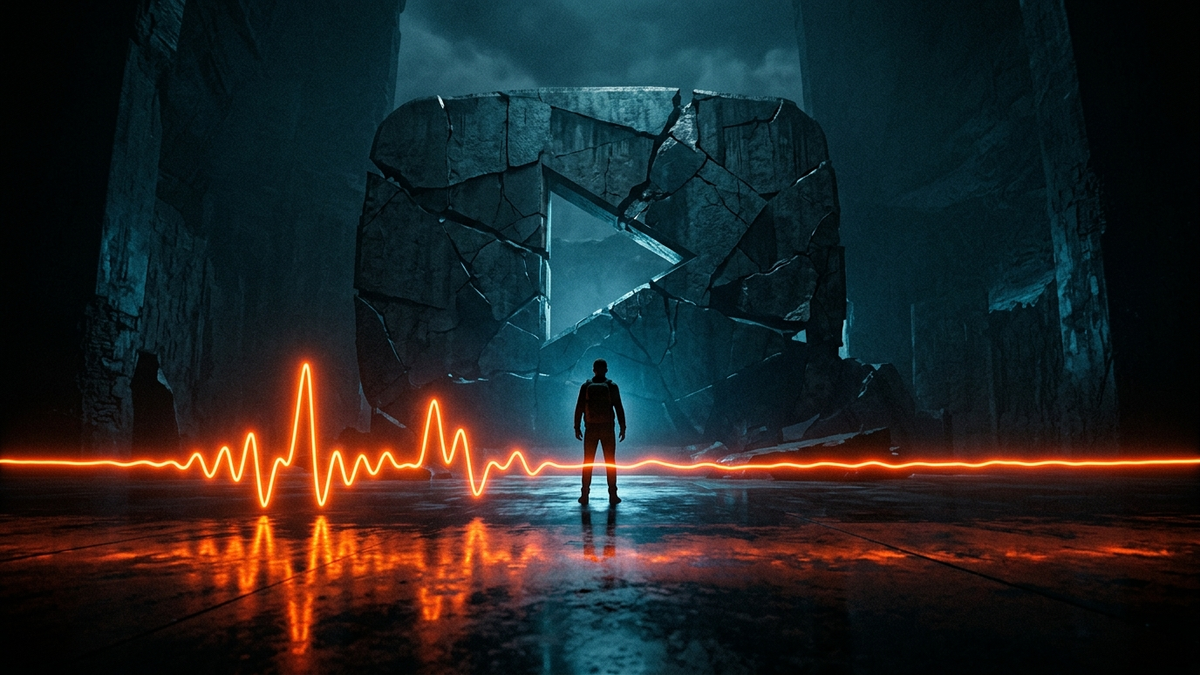
Can You Monetize AI Voiceovers on YouTube Shorts in 2026? A Gritty, No-BS Guide
Quick Answer (TL;DR)
- Yes, but with massive caveats. Monetization in 2026 will depend entirely on the 'transformative value' you add. The AI voice is irrelevant if your content is original, high-effort, and provides a unique viewing experience.
- YouTube's policies will be ruthless. The platform's algorithms will be hyper-tuned to detect and demonetize low-effort, templated, or spammy content. If your channel looks like a content farm using a generic AI voice over stock footage, you will not get paid.
- Your choice of AI tool and disclosure matters. You MUST use premium AI voice generators with clear commercial licenses. Hiding your AI usage will be a losing game; transparency and high production value are your only shields against demonetization.
Introduction
Alright, let's cut the crap. You've seen the flood of faceless YouTube Shorts channels pumping out content, and you're wondering if you can get a piece of that ad-revenue pie using an AI voice. It's 2024 now, and the game is already changing. By 2026, it's going to be a completely different battlefield. I've spent 15 years in the trenches of IT and cybersecurity, watching platforms like YouTube build, break, and rebuild their systems. I'm here to give you the ground truth, not the fluff you'll get from some 'AI guru' trying to sell you a course.
The core of the issue isn't "Can I use an AI voice?" That's the wrong question. The real question is, "Can I create content that is valuable enough for YouTube to monetize, where an AI voice just happens to be one of my production tools?" The difference is massive. One mindset leads to a quick buck followed by a swift demonetization hammer, while the other leads to building a sustainable digital asset.
Forget the shortcuts. By 2026, YouTube's AI detection will be so sophisticated it'll sniff out low-effort content from a mile away. Think of its algorithm not as a dumb gatekeeper, but as a bloodhound trained to find one thing: advertiser-safe, human-driven value. This guide will walk you through the new rules of engagement, the tools you'll need, the traps that will kill your channel, and how to build something that lasts in this new era.
1. The 2026 YouTube Partner Program (YPP) Gauntlet: What's Changed?
First thing you need to get in your head is that the YouTube Partner Program (YPP) is not your friend; it's a business partner with very strict terms. Its primary job is to protect its real customers: the advertisers. By 2026, the vague policies of the past will have been sharpened into surgical instruments. The two biggest boogeymen you'll face are the "Repetitious Content" and "Reused Content" policies, which will have evolved specifically to combat the AI content explosion.
Imagine this: you find a popular Reddit thread, copy-paste the top comment into a free AI voice generator, and slap it over a looped video of someone playing a video game. In 2023, that might have worked. In 2026, YouTube's AI will see that pattern across ten thousand other channels and instantly flag your entire operation as a content farm. It won't matter if you used a slightly different voice or a different game clip; the low-effort digital DNA is identical. This is the new definition of "Repetitious Content"—not just repeating your own videos, but repeating a low-effort format that is plaguing the platform.
The only way to survive this gauntlet is by proving "Significant Transformative Value." This is the key phrase that will determine your fate. It means you took existing ideas or assets and added your unique, significant creative touch. An AI voice, by itself, adds zero transformative value. It's like using a specific font in a book; the font doesn't make the book good. It's your original script, your custom-made animations, your clever editing, your insightful commentary—that's the value. Your content has to feel like it was crafted by a human with a point of view, not assembled by a script pulling from a database. The human review team, which makes the final call on monetization, is trained to spot the difference between a passion project and a get-rich-quick scheme. Don't try to fool them.
Think of it like a firewall. A basic firewall just checks for known bad IP addresses. A next-gen, AI-powered firewall (like YouTube's 2026 review system) analyzes behavior. It looks at your upload frequency, your video templates, your metadata consistency, and the audio fingerprints of your voiceovers. If your behavior matches the profile of a known spammer, the firewall blocks you. Your job is to create content that has a unique, human "behavioral signature" that the system recognizes as legitimate and valuable.
2. The AI Voice Arms Race: Choosing Your Weapon Wisely
Not all AI voices are created equal. Using a free, robotic text-to-speech (TTS) engine in 2026 is like showing up to a Formula 1 race in a go-kart. You'll be laughed off the track before you even start. The quality and, more importantly, the legal standing of your AI voice generator will be a massive factor in your channel's success or failure. Let's break down the tiers of tools you'll encounter.
Tier 1: Premium & Enterprise Platforms. These are the big guns: services like ElevenLabs, Play.ht, Murf.ai, and their future, more advanced competitors. By 2026, their offerings will be staggering—voices with nuanced emotional inflection you can direct like an actor, flawless voice cloning from just a few seconds of audio, and ultra-realistic prosody. But their most important feature is the one most people ignore: a rock-solid Commercial Use License. Paying for a premium plan is not just about quality; it's about buying the legal right to monetize the audio output. It's your proof to YouTube that you're not stealing or misusing the technology. These services are your best bet.
Tier 2: Prosumer & Open-Source Models. This is the wild west. You might find powerful open-source models you can run on your own machine, giving you incredible control. However, the licensing can be a nightmare. Many are released under non-commercial licenses, meaning you're dead in the water for YPP. You have to dig through the documentation to ensure you have the right to use it for profit. It's a high-risk, high-reward path for the technically savvy, but a minefield for beginners.
Tier 3: Free Web Tools & App-Based TTS. Avoid these like the plague. The generic TikTok voice, the free online TTS converters—these are poison for a serious channel. They scream "low effort" to YouTube's review team. Worse, thousands of other channels are using the exact same audio output, which means your content will be instantly fingerprinted by YouTube's Content ID system and lumped in with a massive pile of spammy, repetitious content. You're effectively tainting your own work by using a tainted tool. Monetization with these is a fantasy.
The crucial takeaway is this: your choice of AI voice tool is an investment. You need to read the Terms of Service. I know it's boring, but you have to. Look for the words "commercial use," "broadcasting rights," and "monetization." If they aren't there, close the tab and find another service. In 2026, pleading ignorance won't save your channel when you get that demonetization email.
3. The "Transformative Content" Checklist: Your Monetization Shield
Let's get practical. You understand the theory, but how do you actually create content that YouTube's systems will see as valuable? This isn't about tricking an algorithm; it's about making genuinely good content that a human would want to watch. Here is your checklist, your shield against the demonetization hammer. If you can't tick every one of these boxes for every Short you produce, you're at risk.
Humanize your text and bypass any AI detector instantly with Undetectable AI.
BYPASS AI DETECTION NOW- Is the Script 100% Original? You cannot just copy and paste text from a blog, a tweet, or a Reddit comment. You must write your own script. Synthesize information, add your own unique perspective, tell a story, or craft a compelling narrative. The AI voice is your narrator, but you are the writer and director. If the core of your content is just reading someone else's words, you have failed the first and most important test.
- Are the Visuals High-Effort? This is the great filter. The days of slapping text over a looping clip from a free stock video site are over. "High-effort" means custom graphics, well-produced original footage (even from your phone), dynamic editing that syncs to the narration, or unique animations. The visuals must do more than just exist; they must enhance the story the voiceover is telling. Ask yourself: if I muted the video, would the visuals still be interesting and make sense? If the answer is no, go back to the editing board.
- Does it have Professional Sound Design? A raw AI voice on its own is flat and lifeless. It's a dead giveaway of a low-effort production. You need to act like a real audio engineer. Layer in properly licensed background music to set the mood. Add subtle sound effects that correspond to the action on screen. Mix the audio levels so the voice is clear but the music and effects create a rich soundscape. This single step can elevate your content from feeling cheap and robotic to feeling professional and polished.
- Is there a Clear Human Brand? Even without showing your face, your channel must have a distinct personality. This comes from your writing style, your editing choices, your thumbnail design, and your overall topic selection. It should feel like the product of a single, creative vision. A channel that posts random facts one day, a history lesson the next, and a tech review after that, all with the same generic format, looks like an automated content mill. Be consistent. Be unique. Be human.
💡 Expert IT Tip: Create a unique "Audio Fingerprint" for your AI voice. Don't just export the audio from the generator and drop it in your video. Route it through a Digital Audio Workstation (DAW) like Adobe Audition or the free and powerful Audacity first. Apply a custom Equalizer (EQ) setting—maybe slightly boost the mids and cut a little of the high-end harshness. Add a touch of compression to even out the levels and a very subtle reverb to give it a sense of space. Save these settings as a preset. By processing the audio, you alter its digital waveform, making it unique to your channel and much harder for an automated system to match with the raw output used by thousands of others.
4. The Disclosure Dilemma: To Tell or Not to Tell?
By 2026, the question of disclosing AI usage won't be a choice; it will be a requirement. Platforms and regulatory bodies like the FTC are cracking down on deceptive digital media. YouTube already has a disclosure tool for "altered or synthetic media," and you can bet your last dollar that it will become more granular and mandatory for anyone in the YPP.
The temptation for many creators is to hide their use of AI. They worry that admitting the voice isn't human will break the audience's trust or make the content seem "less authentic." This is short-sighted, 2023-style thinking. In 2026, your audience will be far more AI-savvy. They will be able to spot all but the most advanced, enterprise-grade AI voices. Trying to hide it is a fool's errand. When you get caught—and you will get caught—the backlash from your audience for being deceptive will be far worse than any perceived penalty for being transparent from the start. You'll be branded as a liar, and trust is a currency you can't earn back easily.
The smart play, the only long-term play, is to own it. Be upfront. Put a clear disclaimer in your video descriptions: "This video is voiced using an AI narration tool to ensure consistency and clarity." Frame it as a deliberate production choice, not a dirty secret. You're using a tool to bring your original script and visuals to life, just like you use editing software or a specific camera. Transparency builds trust. It tells your audience and the YouTube review team that you have nothing to hide because you're confident in the value of your actual content—your research, your script, and your visual storytelling.
Think of it from a system admin's perspective. When we find a vulnerability, we disclose it responsibly. Hiding it doesn't make the system more secure; it just creates a ticking time bomb. Hiding your AI usage is the same. You're building your channel on an unstable foundation. When YouTube's policies fully catch up and they run a mass audit of channels for non-disclosure, you don't want to be on the list of violators. Disclose, be honest, and focus on making your content so good that no one cares whether the voice is human or not.
5. Red Flags & Channel Killers: How to Get Demonetized Instantly
I've seen countless systems compromised because someone ignored the obvious red flags. A YouTube channel is no different. There are specific practices that, by 2026, will be the equivalent of clicking on a phishing link. They are surefire ways to get your channel demonetized, or worse, terminated. Treat this as your threat model.
The Content Mill Template. This is Public Enemy No. 1. You create one template—let's say an AI voice reading a "shocking history fact" over 3-4 rotating stock clips with text overlays—and you just feed it new text for 10 shorts a day. YouTube's pattern-recognition algorithms will eat this for lunch. It sees the same video structure, the same audio characteristics, and the same low-effort format. This is what the YPP policy refers to as "programmatically-generated content," and it's an instant and irreversible 'No' from the review team. True creativity is not scalable in this way.
Copyright & Fair Use Abuse. Many creators think AI gives them a shield to narrate copyrighted material. This is dangerously false. Using an AI voice to read a chapter from a new book, summarize a movie with no original critique, or narrate a comic book is still massive copyright infringement. "Fair Use" is a complex legal defense, not a magic wand. It requires your work to be transformative, typically for purposes of commentary, criticism, or parody. Just reading someone else's work aloud, whether by human or AI, is not transformative. It's theft, and it will get you copyright strikes that will kill your channel.
Deepfakes & Malicious Impersonation. This is the red button. The nuclear option. Using advanced AI voice cloning to impersonate a celebrity, a politician, or any public figure without their explicit consent is a line you must never cross. Using it to create fake endorsements, spread misinformation, or create malicious content will not only get your channel permanently banned but could also land you in serious legal trouble. YouTube has zero tolerance for this, and their detection systems for deepfake audio and video will be incredibly robust by 2026. Don't even think about it.
💡 Expert IT Tip: Sanitize your digital supply chain. Where are you getting your assets? Use reputable sites for licensed music (e.g., Epidemic Sound, Artlist) and stock footage if you must (e.g., Storyblocks). Keep records of your licenses and subscriptions. If YouTube ever challenges your content, you need a paper trail to prove you have the rights to every single element in your video. Treat your channel like a production company, not a hobby. Document everything, because in a dispute, the burden of proof is on you.
Conclusion
So, can you monetize AI voiceovers on YouTube Shorts in 2026? Yes, absolutely. But the dream of a push-button, passive income machine is dead. It was never really alive to begin with. The gold rush is over, and now we're in the era of the craftsmen. The bar for entry is low, but the bar for success is higher than ever.
Success won't be determined by the AI you use, but by the creativity you bring. Your value as a creator is not in your ability to operate a text-to-speech tool. It's in your unique ideas, your storytelling ability, your visual flair, and your dedication to quality. The AI voice is just that—a tool. It's a high-tech microphone, a digital narrator. It can't write a compelling script, it can't design an eye-catching thumbnail, and it can't build a community.
Treat the AI as a powerful, tireless intern. It can handle the narration, but you must be the director, the writer, and the editor-in-chief. Focus your energy on what makes content human: originality, emotion, and a unique point of view. If you do that, you won't have to worry about monetization. YouTube will be happy to have you. If you try to take shortcuts, however, the algorithm will find you, and it will be unforgiving.
Don't wait for the headlines. Our Private Telegram Channel delivers real-time AI security updates and digital wealth strategies before they go viral. Stay protected. Stay ahead.
⚡ JOIN THE 1% NOW🧰 Try Our Free Tools & Calculators
No sign-up required. Instantly check risks, analyze AI text, or calculate your digital finances.