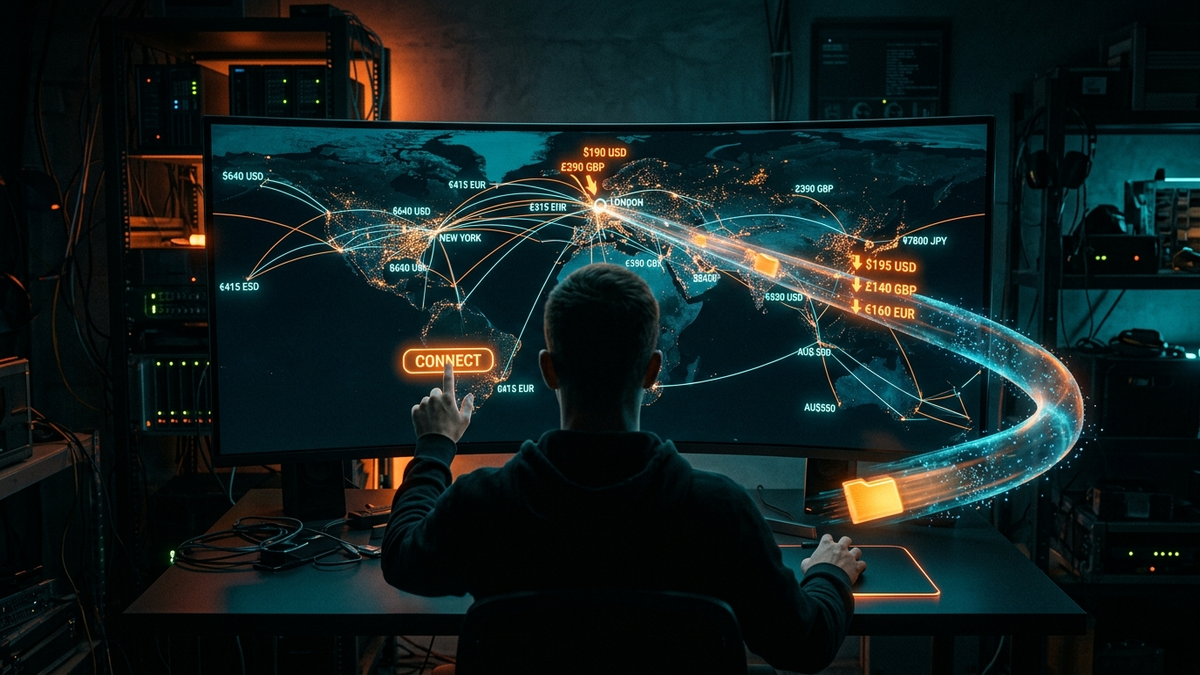
How a VPN Can Save You Hundreds on Flight Tickets and Hotels: The Definitive Guide from a 15-Year IT Vet
Quick Answer (TL;DR)
- VPNs mask your real IP address, making it look like you're browsing the internet from a different country of your choice.
- Airlines and booking sites use dynamic pricing, which means they show higher prices to users in wealthier countries and to those who have searched for a route multiple times.
- By connecting to a VPN server in a lower-income country (like Mexico or Turkey), you can often trick these sites into showing you significantly cheaper prices for the exact same flight, hotel room, or rental car.
Introduction
Look, I've been in the IT trenches for 15 years. I've seen how the sausage gets made online, and I'm telling you, the game is rigged. You search for a flight to Miami. You check again an hour later, and the price has jumped $50. It’s not your imagination, and it’s not a coincidence. It's a calculated strategy by travel companies to squeeze every last dollar out of you based on your data.
They know where you live, what device you're on, and how desperately you want that beach vacation. They use this information to show you a price tailored to what they think you're willing to pay. It’s called dynamic pricing, and it’s a digital pickpocket. But I’m here to give you the tool to fight back. This isn't some theoretical nonsense; it's a practical, step-by-step guide on how to use a simple piece of tech—a VPN—to turn their own system against them and save a boatload of cash.
The Dirty Secret of Dynamic Pricing: Why You're Being Overcharged
Let's get one thing straight: dynamic pricing isn't a bug, it's a feature. Travel websites are multi-billion dollar operations, and they invest heavily in algorithms designed for one purpose: to maximize profit on every single click. They aren't showing everyone the same price. They're showing *you* a specific price based on a profile they've built of you in milliseconds. It’s a silent, digital auction where your wallet is the prize, and you didn't even know you were bidding.
The number one factor they use is your IP address, which is like the mailing address for your computer. It tells them your physical location with spooky accuracy. If you're searching for a flight from New York to London while you're physically in Manhattan, their system flags you as a high-value customer from a wealthy area. They assume you have more disposable income and jack up the price. But if the exact same search comes from an IP address in, say, Mexico or Vietnam, the algorithm often shows a much lower price, assuming a lower purchasing power for that region. It’s the same seat, same plane, same time—just a different price based on digital geography.
But it doesn't stop there. These systems also analyze your browsing history via cookies. If you've checked the price for that same flight five times in two days, their system sees desperation. It knows your intent is high, so it incrementally raises the price to create a false sense of urgency, pressuring you to "book now before it goes up again!" They even profile your device. A search from the latest MacBook Pro or iPhone often yields higher prices than one from an older Windows PC or Android phone, because the device itself is a wealth indicator. This isn't a conspiracy theory; it's just brutally effective data-driven marketing. You are being profiled and priced accordingly, and without the right tools, you're just a sitting duck.
Your Digital Disguise: How a VPN Actually Works (No Geek-Speak)
So how do we fight this? You need a digital disguise. That's exactly what a VPN, or Virtual Private Network, is. Forget the complex technical diagrams. Think of a VPN like a secure, private tunnel for your internet connection. Normally, when you visit a website, your computer connects directly to it, openly announcing your IP address and location. A VPN changes that entirely. It reroutes your connection through a private server located somewhere else in the world before it reaches its final destination.
The process is incredibly simple from your end. You install a VPN application, you open it, and you see a list of countries. You click "Connect" on a server in Brazil. From that moment on, all your internet traffic is encrypted (scrambled so no one can read it) and sent through that server in Brazil. When you then go to the airline's website, their system doesn't see your true IP address in Chicago. It sees the IP address of the VPN server in São Paulo. As far as they're concerned, you *are* a customer browsing from Brazil, and they'll show you the pricing intended for that market. You've effectively put on a digital mask and are spoofing your location to get a better deal.
This process gives you two massive advantages. The first is IP masking, which is the core of this money-saving trick. It lets you digitally "teleport" to different countries to comparison shop. The second is encryption. This is the security side of the coin. The VPN scrambles all the data traveling between your device and the VPN server. This is critical when you're using public Wi-Fi at a coffee shop, airport, or hotel, as it prevents hackers on the same network from snooping on your activity or stealing your credit card details when you finally book that cheap flight. It’s both an economic tool and a crucial piece of personal security armor.
💡 Expert IT Tip: Not all VPNs are created equal. Avoid free VPNs like the plague. They have to make money somehow, and they usually do it by logging your browsing activity and selling your data to advertisers. It completely defeats the purpose. I recommend paid services like NordVPN, ExpressVPN, or Surfshark. They have massive server networks (more countries to test), strict and audited "no-logs" policies, and a critical feature called a "kill switch." A kill switch automatically cuts your internet connection if the VPN drops for even a second, which prevents your real IP address from accidentally leaking to the website you're on.
The Step-by-Step Playbook for Snagging Cheaper Flights
Alright, theory is done. Let's get our hands dirty and actually book something cheap. Following this playbook methodically is the key. Don't skip steps. The algorithms are smart, but this process is smarter because it systematically erases the data trail they rely on to overcharge you. This is the exact method I use personally, and it works like a charm more often than not.
Step 1: The Clean Slate Protocol. Before you even think about searching, you must wipe your tracks. Open your web browser and clear all of its cookies and cache. These little data files store your previous searches and tell the airline you're a repeat visitor. An even better method is to use your browser's "Incognito" or "Private" mode for this entire process. Every time you close an incognito window, it automatically deletes all cookies and history from that session, giving you a fresh start for each new search.
Step 2: The VPN Hop. Now, fire up your VPN application. This is where the magic happens. Don't just connect to a random country. Be strategic. Good places to start are often lower-to-middle-income countries or the home country of the airline you're planning to fly. For example, if you're booking a flight on Lufthansa, try connecting to a VPN server in Germany first. Other consistently good options to test include Mexico, Brazil, India, Turkey, Romania, and Malaysia. Select your target country and hit "Connect."
Step 3: The Search & The Log. With your VPN connected and your incognito window open, go to a flight aggregator like Google Flights or Skyscanner. Enter your departure and destination cities and your dates. Let the results load, and take note of the price. Don't trust your memory. Open a simple Notepad file or a spreadsheet and log the VPN country and the price you found. For example: `Mexico - $452; India - $419; Germany - $510`.
Protect your identity and browse privately with Surfshark One - the all-in-one security suite.
GET 60% OFF SURFSHARK NOWStep 4: Rinse and Repeat. This is the most important part. Close the incognito browser window completely. Go back to your VPN app, disconnect from the current server, and connect to a server in a *different* country from your list. Open a *new* incognito window and perform the exact same search. Log the new price. Repeat this process for at least 5-7 different countries. You will often see price fluctuations of 10-50%. The five minutes you spend "country hopping" can literally save you hundreds of dollars.
Step 5: The Purchase. Once you've found the rock-bottom price, do not disconnect the VPN. Stay connected to the server that gave you the best deal. Go through the booking process on the airline or travel site. Most modern payment gateways and major credit cards will work just fine, even if you're on a foreign IP. You've now successfully beaten the algorithm.
Conquering Hotel and Rental Car Costs with the Same Tactics
Don't stop at flights. The dynamic pricing model is just as rampant, if not more so, in the hotel and rental car industries. These companies are masters at regional pricing, and using a VPN can unlock some truly staggering discounts. The underlying principle is identical: they profile your location via your IP address and adjust the price of the room or car based on what they think your market can bear. A week-long car rental from LAX might look a lot more affordable to someone booking from a server in Toronto than to someone booking from Beverly Hills, just a few miles away.
For hotels, the strategy is very similar to the flight playbook. Use an incognito window, connect your VPN, and then search on major booking platforms like Booking.com, Agoda, or directly on the hotel chain's website (e.g., Marriott, Hilton). A great tactic is to test the price from a VPN server located in the *same country as the hotel*. A hotel in Paris might offer a "local" discount to someone browsing from a French IP address that a tourist from the U.S. would never see. Also, try connecting to servers in countries where the booking site itself is popular. For example, Agoda is a huge platform in Asia, so testing prices from servers in Singapore or Thailand can sometimes yield unique results.
Rental cars are another gold mine. The price for the exact same car, from the same company, at the same airport pickup location can vary wildly. I've personally seen a week-long rental quote drop by over $200 just by switching my VPN from a U.S. server to a Mexican one. Follow the exact same "Clean Slate" and "VPN Hop" protocol. Clear your cookies, go incognito, and cycle through different countries while logging the prices. Remember to compare apples to apples—ensure the rental terms, insurance coverage, and car class are identical in each search. The few minutes it takes to check five different virtual locations is one of the highest-paying "jobs" you can do from your couch.
💡 Expert IT Tip: This technique extends far beyond travel. Any online service with regional pricing is fair game. I've used this to get cheaper subscriptions for software like Adobe Creative Cloud and streaming services like YouTube Premium, which have drastically different monthly fees depending on the country. For an advanced, automated workflow, use a browser extension like 'Cookie AutoDelete'. You can configure it to automatically wipe a website's cookies the instant you close its tab. This saves you the manual step of clearing your cache or closing and reopening your incognito window every single time you want to test a new VPN location.
The Pitfalls and Pro-Tips: What Can Go Wrong
This isn't a flawless magic trick. It's a powerful technique, but you need to be aware of the potential snags. Going in with your eyes open will prevent frustration and help you troubleshoot if things get weird. The system is designed to be complex, but these hurdles are almost always easy to overcome if you know what to look for. Forewarned is forearmed.
First, you might run into payment and currency issues. When you find a great deal while connected to a server in Brazil, the booking site will likely display the price in Brazilian Real (BRL). When you go to pay, your credit card company will handle the currency conversion automatically. However, many cards charge a "foreign transaction fee," typically around 3%, which can eat into your savings. The pro move here is to use a credit card that has no foreign transaction fees—many travel-focused cards offer this as a key perk. Always do a quick Google search for the current exchange rate so you know exactly what you'll be paying in your home currency.
Next up are language barriers. If you connect to a server in Turkey, the airline's website might automatically switch to Turkish. Don't panic. Virtually every modern web browser, like Google Chrome, has a built-in translation feature. It's usually an icon in the address bar or a simple right-click option to "Translate to English." The translation might not be perfect, but it will be more than good enough to navigate the booking process. Another potential issue is account lockouts. If you're logged into your American Airlines AAdvantage account and suddenly try to book a flight from a server in Romania, their fraud detection systems might flag it as a suspicious login and temporarily lock your account. The simple fix is to do all your price-shopping and comparison while logged out. Only log in at the very final step of the checkout process to add your frequent flyer number.
Finally, remember that this isn't guaranteed to work every single time. Sometimes, especially with no-frills budget airlines that have very rigid pricing structures, the price difference between countries will be minimal or zero. The goal isn't to find a 50% discount on every single search. The goal is to play the odds. By spending 10 minutes checking multiple virtual locations, you give yourself a chance to hit a pricing anomaly that can save you hundreds. It's a numbers game, and a VPN lets you roll the dice more times than anyone else.
Conclusion
The internet was sold to us as a great equalizer, but when it comes to commerce, that's a lie. It's a landscape of targeted ads, behavioral tracking, and algorithmic pricing designed to extract maximum value from you. Companies are not your friends; they are for-profit entities using your own data against you. They are betting that you won't know how their systems work or that you'll be too lazy to do anything about it.
A VPN flips the script. It's more than just a cybersecurity tool for protecting your privacy. It's an economic lever that puts a measure of control back in your hands. It allows you to become a digital chameleon, to step outside the demographic and geographic box they've put you in, and to access the same product for a fairer price. It lets you challenge the core assumption of dynamic pricing: that where you are should determine what you pay.
Stop letting faceless algorithms pick your pocket. The few dollars a month for a quality VPN subscription can be paid back tenfold with the savings from just one single flight or hotel booking. Take control of your digital identity, erase your tracks, and start making the internet work for you, not against you. Your wallet will thank you for it.
Don't wait for the headlines. Our Private Telegram Channel delivers real-time AI security updates and digital wealth strategies before they go viral. Stay protected. Stay ahead.
⚡ JOIN THE 1% NOW🧰 Try Our Free Tools & Calculators
No sign-up required. Instantly check risks, analyze AI text, or calculate your digital finances.