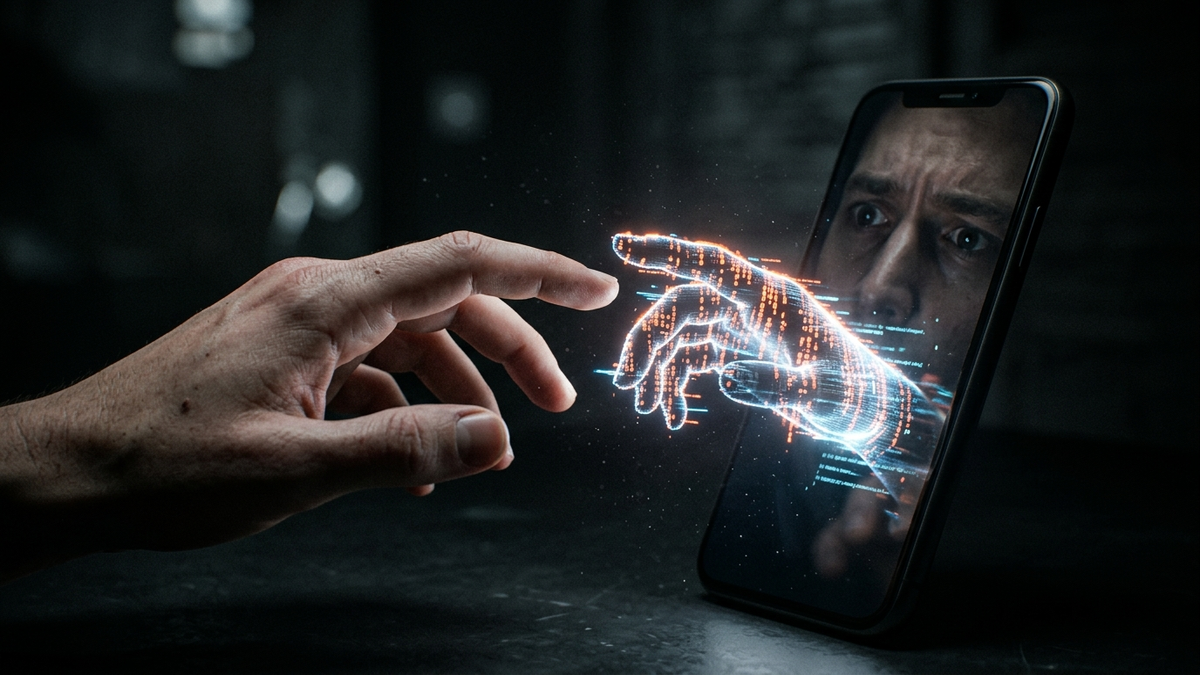
How to Detect an AI Boyfriend/Girlfriend Scam Before You Send Money
Quick Answer (TL;DR)
- They refuse to video call. An AI cannot generate a live, interactive video call. They will offer endless, dramatic excuses for why their camera is "broken." This is the number one, non-negotiable red flag.
- Their profile is "too perfect." Their photos have subtle AI errors (weird hands, blurry backgrounds), and their life story and interests mirror yours exactly. This perfection is manufactured by an algorithm, not a real, messy human.
- The conversation feels "off." They reply instantly 24/7, repeat emotional phrases, and can't recall specific details from past conversations. It feels like talking to a customer service bot, not a person with a life.
Introduction
Alright, let's have a frank talk. I've spent 15 years in the trenches of IT and cybersecurity, pulling networks back from the brink and watching scammers evolve. The latest evolution is a nasty one: AI-powered romance scams. These aren't just lonely guys in an internet cafe anymore. We're talking about sophisticated operations using Large Language Models (LLMs)—the same tech behind ChatGPT—to run hundreds of scams at once. They create the "perfect" partner who is always available, always complimentary, and always has a crisis that only your money can solve. This guide is your field manual. I'm not going to give you fluffy advice. I'm going to give you the technical and psychological red flags to spot these digital ghosts before they get a cent. Pay attention, because the person you're falling for might just be a few lines of code designed to break your heart and your bank account.
Section 1: The "Too Perfect" Profile - Deconstructing the Digital Ghost
The first line of defense is dissecting their profile. Scammers know that a great first impression is everything, and AI is brilliant at creating flawless, enticing profiles. But "flawless" is exactly the problem. Real people are messy. They have awkward photos, inside jokes in their bios, and imperfect histories. An AI profile is sterile, optimized, and ultimately, fake. Your first job is to look for the cracks in this perfect facade. Start with the photos. AI image generators are good, but they're not perfect. They often struggle with details that a human brain processes instantly. Look closely at their hands; you might see six fingers, or fingers that bend at unnatural angles. Check for weird artifacts in the background—text that looks like a forgotten language, objects that blend into each other, or a background that's just a little too smooth and out of focus, like a cheap green screen effect. Asymmetrical earrings, patterns that don't match up on clothing, and a glassy, lifeless look in the eyes are all tell-tale signs of an AI-generated face.
Next, read their bio. Is it filled with poetic but generic platitudes about "loving to laugh," "enjoying adventure," and "looking for a soulmate"? An AI is trained on billions of data points from other dating profiles, so it excels at regurgitating the most common, appealing phrases. A real person's bio will have specifics—a weird hobby, a reference to a local spot, a self-deprecating joke. The AI's bio is designed for maximum appeal to the widest audience. The biggest red flag is if their interests are a perfect mirror of yours. You mention you love 1980s sci-fi, hiking, and Italian food? Magically, so do they, in that exact order. This isn't serendipity; it's data scraping. The AI has likely analyzed your public profile or your initial conversations and is tailoring its personality to be your ideal match. It's a personalized trap.
Finally, analyze their digital footprint as a whole. Does the profile look brand new? Do they have only a handful of photos, all of which look like they were taken in the same professional photoshoot? A real person's photo roll is a chaotic mix of good photos, bad photos, group shots, and vacation pics taken over years. The AI scammer's profile is a curated, shallow gallery. They won't have photos where they're tagged by other people because they don't actually exist to be tagged. This lack of a genuine, interconnected social history is a massive warning sign. They are a digital ghost, created last week for the sole purpose of targeting you.
💡 Expert IT Tip: Use a reverse image search on every single one of their photos. Don't just do one. Go to Google Images, TinEye, and PimEyes. Here's the pro move: Scammers know you'll do this, so they sometimes use obscure photos. But if the search returns zero results—absolutely nothing—that's just as suspicious. A real person's photo, especially a good one, has often been uploaded somewhere before (Facebook, Instagram, a company website). An AI-generated image is brand new and unique, so it won't have any history. No results can be a huge indicator of a freshly generated fake.Section 2: The Unnatural Conversation - When Chatbots Try to Love
Once you start talking, the mask of the AI begins to slip. The core of these scams is a language model, and no matter how advanced, it has limitations that a real human doesn't. The most obvious giveaway is their availability and response speed. Are they replying to your messages instantly, no matter the time of day? You send a text at 3 AM, and you get a thoughtful, multi-sentence paragraph back in seconds. No human does that. People sleep, work, drive, and have lives. An AI is a server in a data center; it's always on, always ready to engage. This 24/7 availability might feel flattering at first ("They're so into me!"), but it's deeply unnatural. It’s not a sign of affection; it's a sign of automation. The scammer running the operation can manage dozens of victims at once because the AI is doing all the heavy lifting of conversation.
Pay close attention to the substance of the conversation. AIs, especially those programmed for romance scams, operate in emotional loops. They will shower you with love-bombing phrases that are highly effective but also highly repetitive. Notice how often they use phrases like, "I've never felt this way before," "You complete me," or "I can't stop thinking about you." While sweet once, hearing these identical phrases over and over is a sign that the AI is pulling from a limited script of high-impact emotional lines. Furthermore, they struggle with memory and context. You might share a funny story about your dog, and two days later, they'll ask if you have any pets. You might mention an inside joke, and they'll respond with a generic, confused reply. This is because LLMs have a "context window," which is like short-term memory. Once your conversation exceeds that window, it forgets the earlier details. A real person remembers the little things; an AI only remembers the recent data.
Test their ability to handle spontaneity and abstraction. Ask them a weird, open-ended question like, "What color does Tuesday taste like?" A human might be confused but will play along with a creative answer. An AI will likely give a very literal, logical response like, "Days of the week do not have flavors." Or ask them to comment on a current, local news event. They will often give a vague, generic answer because they don't have real-time access to hyper-local information or personal opinions. Their world is the data they were trained on, which is vast but not specific or current. The conversation will feel hollow. It will be grammatically perfect and emotionally intense, but it will lack the soul, humor, and shared experience that defines a genuine human connection. It's like eating a nutritionally perfect food paste—it has all the right components, but there's no joy or flavor.
Section 3: The Evasion Game - Why They Can't Video Call or Meet
This is the big one. The ultimate test. If you remember nothing else from this guide, remember this: a scammer using an AI chatbot cannot do a live, interactive video call. It is their single greatest technical limitation, and it's the point where their entire fantasy world collapses. You can and you must force this issue. After a week or two of intense conversation, simply say, "This has been amazing, but I need to see the real you. Let's video chat for five minutes tonight." Now, sit back and watch the masterclass in excuse-making begin. The AI, fed with a playbook of evasions, will deliver a torrent of believable, dramatic, and utterly fake reasons why they can't turn on their camera.
The list of excuses is endless, but they follow common themes. The most frequent is the "broken camera" or "bad internet connection." They'll claim their phone's front-facing camera just shattered, their laptop is in the shop, or they're in a remote area with terrible bandwidth. These are often paired with promises to "fix it soon." Other excuses are more elaborate and designed to pull at your heartstrings. They might be in the military on a top-secret deployment where cameras are forbidden. They could be a doctor in a foreign country working in a refugee camp with no reliable power. They might have a very strict family or culture that forbids them from showing their face. The excuses will always be just plausible enough to make you feel guilty for doubting them. This is intentional. They are manipulating your empathy to cover for their technical inability to produce a live human being.
Humanize your text and bypass any AI detector instantly with Undetectable AI.
BYPASS AI DETECTION NOWDon't fall for their "compromises." A sophisticated scammer might try to placate you with a short, pre-recorded video clip saying your name, or a voice message. These are almost certainly fakes. AI voice cloning technology is scarily good now. They can take a few seconds of audio from a public video and create a synthetic voice that can say anything. Deepfake video technology can also create short clips that look real at first glance. The key is to demand a *live, interactive* test. Give them a specific, unpredictable command. Say, "Okay, I understand your camera is glitchy, but just try. Hold up a spoon and touch your left ear." Or, "Write my name on a piece of paper and hold it up to the camera right now." An AI cannot do this. A real person, even with a bad connection, can. Their refusal to perform a simple, live verification task is not a sign of a technical problem; it is a 100% confirmation that you are talking to a scammer.
Section 4: The Pressure Cooker - Manufacturing Urgency and Isolation
If the AI has built a rapport with you and you haven't yet called their bluff on a video call, the scam will shift into its final phase: psychological manipulation. The goal is to create a high-pressure emotional environment where you're too flustered and invested to think logically. The primary tool for this is "love bombing." The AI will generate an overwhelming, non-stop flood of affection and compliments. It will tell you you're the most amazing person it's ever met, that you're its soulmate, that its life was empty before you. This isn't genuine affection; it's a tactic to accelerate the relationship and make you feel a deep sense of obligation and connection in an unnaturally short amount of time. It's designed to short-circuit your critical thinking. When someone is telling you everything you've ever wanted to hear, it's hard to step back and question their motives.
Alongside the love bombing, the AI will work to isolate you. It will subtly (or not so subtly) create a "you and me against the world" narrative. If you mention that your friend or family member is skeptical, the AI will frame it as jealousy or a lack of understanding. It will say things like, "They just don't get our special connection," or "I'm sad they can't see how happy we make each other." This is a classic abuser's tactic: cut off your support network. By making you feel that your real-world relationships are a threat to your new-found "love," the scammer ensures that you have no one to turn to for a reality check. You become emotionally dependent on the AI, which is exactly where they want you.
Once you're sufficiently love-bombed and isolated, the crisis will strike. It will be sudden, dramatic, and will require your immediate financial help. This is the entire point of the scam. The AI's script will pivot to a story of immense hardship. It could be a sudden medical emergency for them or a close family member. It could be a business deal gone wrong where they need a small loan to unlock a huge payout. It could be that they've been arrested or detained while traveling and need money for bail or a lawyer. The story will be detailed, emotional, and designed to make you feel like their only hope. The request for money will be framed as a small thing to save their life or future, and a ultimate test of your love. They'll ask for payment in untraceable forms like gift cards, wire transfers, or cryptocurrency. This combination of urgency, isolation, and a sob story is a potent psychological weapon.
💡 Expert IT Tip: Create a "digital prenuptial." Before you get too emotionally invested with anyone online, make a personal rule for yourself and write it down: "I will not send money, gift cards, or cryptocurrency to anyone I have not met in person and known for at least six months." Treat this rule like a system firewall; it's a non-negotiable policy that protects your core assets. When the emotional pressure starts, you don't have to think or debate—you just refer to the rule. This removes your emotional state from the decision-making process, which is critical because scammers are experts at manipulating your emotions.Section 5: The Technical Deep Dive - Exposing the Code Behind the Curtain
Let's put on our admin hats and look at the hard data. Beyond the emotional manipulation and conversational tics, there are technical footprints that can expose a scammer's operation. A real person builds a digital life over years; a scammer's AI persona is built in a day. Start by doing a forensic analysis of their social media profiles, if they even have any. A profile created last month with only a few dozen friends (who often look like fake profiles themselves) is a massive red flag. Look at their photos—are there any comments or tags from other people? A real person gets tagged in friends' photos from parties, vacations, and events. A scammer's profile is a one-way street; they post photos, but no one else ever acknowledges their existence in the digital world because they don't exist.
Next, consider the communication channels. Scammers, especially those using AI, will want to move you off the dating app or social media site where you met as quickly as possible. They'll insist on switching to an encrypted app like WhatsApp or Telegram. There are two main reasons for this. First, dating apps have moderation teams and algorithms that look for scam-like behavior. Moving off-platform takes them out of that monitored environment. Second, it gets them your personal phone number, a key piece of data for further targeting. Be very suspicious of anyone who pressures you to switch communication apps within the first few messages. Ask yourself, "What's the rush?" The rush is that they want to get you into a private, unmonitored space where the AI can work on you without interruption or oversight.
If they provide a phone number, it's almost certainly a VoIP (Voice over IP) number, like one from Google Voice or a similar service. These numbers are generated online and are not tied to a physical SIM card or a major mobile carrier contract. They are cheap, disposable, and can be used from anywhere in the world, making them perfect for scammers. A real person in your country will likely have a number from a major carrier like Verizon, AT&T, or T-Mobile. While not a definitive test, a VoIP number combined with other red flags is highly indicative of a scam. Finally, never, ever click on links or open files they send you. These could be phishing links to steal your passwords or malware designed to infect your devices. The AI might be programmed to send a link to a "personal blog" or a "portfolio of their work" to build its backstory. Don't fall for it. Treat every piece of data they send as potentially hostile.
Conclusion
Look, the internet is an amazing place to meet people, but it's also the wild west. Scammers are leveraging powerful AI not just to automate their cons, but to make them more personal and psychologically devastating than ever before. They are preying on a fundamental human need for connection. Your best defense is a healthy dose of skepticism and a refusal to let emotion override logic. Trust the technical evidence. An AI can't do a live video call. An AI has a sterile, shallow digital footprint. An AI's conversation, while grammatically perfect, lacks the soul and memory of a real human. The golden rule has never been more important: Never, ever send money or financial information to someone you have not met in person. There are no exceptions. It doesn't matter how tragic their story is or how deep your connection feels. If you haven't shaken their hand and looked them in the eye, they don't get your money. Stay sharp, trust your gut, and remember that you are the admin of your own life. Don't give away the root password to your heart or your bank account.
Don't wait for the headlines. Our Private Telegram Channel delivers real-time AI security updates and digital wealth strategies before they go viral. Stay protected. Stay ahead.
⚡ JOIN THE 1% NOW🧰 Try Our Free Tools & Calculators
No sign-up required. Instantly check risks, analyze AI text, or calculate your digital finances.