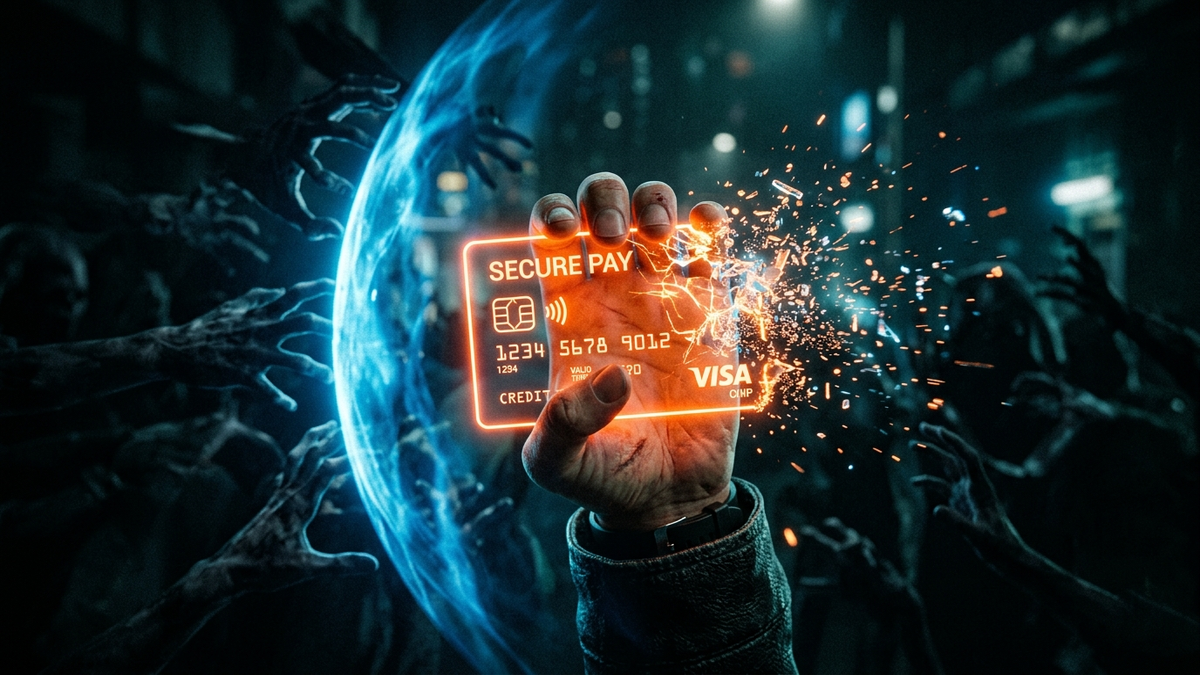
How to Use Virtual Cards to Block Subscription Scams Forever
Quick Answer (TL;DR)
- Virtual cards are disposable, temporary credit card numbers linked to your real account, acting as a secure firewall for your money.
- Block unwanted recurring charges by creating cards with strict spending limits (e.g., $1) or by making them single-use, which automatically deactivates them after one purchase.
- Use them for every free trial, new service, or sketchy website to completely shield your real card details from being stolen in data breaches or misused by dishonest companies.
Introduction
Alright, let's have a real talk. You've been there. You signed up for a "free" trial for some video editor or streaming service, entered your credit card details, and promptly forgot about it. A month later, a mysterious $49.99 charge hits your account. You've just been snagged by a subscription scam, a perfectly legal form of digital pickpocketing. These companies build their entire business model on your forgetfulness and their intentionally confusing cancellation process.
For years, we've been told the only defense is to "be more careful" or "set a calendar reminder." That's garbage advice. It puts the blame on you, the victim, not the predator. I've spent 15 years in the IT trenches, watching these scams evolve from clumsy phishing emails to sophisticated, automated systems designed to bleed you dry, one small, recurring charge at a time. It's time to stop playing defense. It's time to go on the offense with the single most powerful tool you're probably not using: the virtual card.
Think of a virtual card as a burner phone for your finances. It's a disposable, controllable, and trackable shield that you put between your real money and the chaos of the internet. Using them correctly isn't just a good idea; it's the only way to permanently end the war on your wallet and take back absolute control. Forget calendar reminders. We're going to build a fortress.
What the Hell Are Virtual Cards and Why Haven't You Been Using Them?
Let's cut through the jargon. A virtual card is not a new bank account or a physical piece of plastic. It's a unique, randomly generated 16-digit card number, expiration date, and CVV code that is linked to your actual credit or debit account. The key difference is that it acts as a proxy, a middleman with a bouncer. When you use it online, the merchant never sees your real card number. They only see the disposable, virtual one. This single fact is a monumental leap in personal security.
Imagine your real credit card is the master key to your house. You wouldn't hand that out to every stranger who offers you a free newspaper, right? Yet, that's exactly what you do every time you type your primary card details into a new website. If that website gets hacked—and they all get hacked eventually—your "master key" is now in the hands of criminals. They can use it anywhere, for anything, until you notice and go through the headache of canceling it. A virtual card, on the other hand, is like a one-time-use keycard you give to a hotel guest. It only opens one door, for a limited time, and you can deactivate it instantly without changing the locks on your entire house.
There are generally three flavors of virtual cards. First, you have single-use cards. These are perfect for buying from a website you'll never use again. The moment the transaction is complete, the card number vaporizes. It ceases to exist. Second are recurring-use cards. You create one of these for a specific subscription, like Spotify. You can set rules on it, which is where the magic happens. The third, and most powerful, type is the vendor-locked card. This card, once used with a merchant, can *only* be used with that merchant forever. If a hacker steals your Netflix virtual card number and tries to buy something on Amazon, the transaction is instantly declined at the network level. It’s like having a key that physically changes shape to fit only the first lock it was ever put into. This is how you move from basic protection to total financial lockdown.
The reason most people aren't using them is a mix of old habits and a lack of awareness. Banks don't aggressively market them because they'd rather you just use the piece of plastic with their logo on it. But in my world, using your primary card number online is like walking through a minefield barefoot. It's not a question of *if* your data will be compromised, but *when*. Virtual cards are the steel-toed boots that let you walk through that field without a care.
The Anatomy of a Subscription Scam: How They Trap You
To defeat the enemy, you have to understand how they think. Subscription scammers aren't bumbling idiots; they are masters of psychology and user interface deception, a field we call "dark patterns." They've engineered a system that feels like a five-star hotel when you check in, but a maximum-security prison when you try to leave. It all starts with the most common trap in the book: the "Risk-Free" Trial. They offer you a 7, 14, or 30-day free trial, but require a credit card upfront for "verification" or "to ensure uninterrupted service." This is a calculated bet. They know a significant percentage of people will forget to cancel. The business model isn't the service itself; it's the revenue from people who forget they're even customers.
Once you're in, they make cancellation a nightmare. This is the Dark Pattern Maze. You won't find a big, red "Cancel Subscription" button on your dashboard. Instead, you have to click through a labyrinth of menus: "Account," then "Billing Details," then "Manage Plan," then "Review Options," where they present you with three confusing "downgrade" plans instead of a simple cancellation. They use confusing language like "I do not wish to lose my benefits" as the link you have to click to proceed. Some of the worst offenders even force you to call a customer service number during limited business hours and sit on hold for 45 minutes, hoping you'll just give up. They are adding friction, banking on the fact that your time is more valuable than the $15 they're stealing from you each month.
Then there's the truly insidious "Zombie Charge." This happens when you successfully navigate the maze and cancel your service, but the charges keep coming. The company claims it was a "billing system error" and promises a refund that never materializes. They are counting on you not checking your credit card statements with a fine-toothed comb every single month. They continue to charge you, hoping your payment just blends in with the noise of your other legitimate transactions. Fighting this requires phone calls, emails, and often a painful chargeback process with your bank, which you might lose if you can't prove you canceled.
Finally, we have the Automatic Price Jacking tactic. You sign up for an amazing introductory offer, like $10 for the first year. Buried on page 17 of the 28-page terms of service agreement (that nobody reads) is a clause stating that the plan will automatically renew at the "standard rate" of $199 per year. There's no email warning you of the impending price hike. There's just a sudden, shocking charge on your statement a year later. All of these tactics are designed to exploit human psychology—our forgetfulness, our aversion to conflict, and our failure to read the fine print. A virtual card short-circuits their entire playbook.
Your Step-by-Step Battle Plan: Deploying Virtual Cards
Enough theory. Let's get to work. This is your practical, step-by-step guide to making subscription scams a thing of the past. Your mission is to put a digital bodyguard in front of every single online transaction, and here's how you do it.
Step 1: Choose Your Weapon. You need a virtual card provider. Many major banks now offer them for free. Capital One has Eno, and Citi has its own service. These are good starting points. However, for maximum power, I strongly recommend a dedicated third-party service like Privacy.com. These services are platform-agnostic (they link to your bank account, not just one credit card) and offer far more granular controls, which we'll get into. Sign up for one of these services. The setup takes about ten minutes and involves linking your funding source, just like with PayPal.
Step 2: The "Free Trial" Kill Switch. This is your first and most satisfying move. The next time you see a "free trial" that demands a credit card, don't use your real one. Open your virtual card app and generate a new card. Name it after the service (e.g., "Shady Video Editor Trial"). Now, set the spending limit. Don't set it to zero; some systems need to place a $1 authorization hold to verify the card is real. Set the limit to exactly $1 per month. Now, use this card number to sign up. The $1 hold will be approved, and your trial will begin. A week later, when the company tries to charge you the full $49.99, the transaction will be instantly declined by your virtual card provider because it exceeds the $1 limit you set. You'll get a notification, and the scam is stopped dead in its tracks. You don't have to remember to cancel. The card does it for you.
Protect your identity and browse privately with Surfshark One - the all-in-one security suite.
GET 60% OFF SURFSHARK NOWStep 3: The Subscription Leash. For legitimate subscriptions you actually want to keep, like Netflix or your cloud storage, you'll create a dedicated card for each one. Create a new card, name it "Netflix," and set the monthly spending limit to the exact price of your plan—say, $16. For an extra layer of security, lock the card to the merchant. This ensures the card can *only* ever be used at Netflix. Now, if Netflix ever tries to raise your price without your consent, the charge will be declined. If their database is breached, the stolen card number is useless anywhere else. You've put each subscription on its own tight leash, giving it exactly enough rope to take its payment and nothing more.
💡 Expert IT Tip: For ultimate privacy, pair your virtual card with a masked email address from a service like SimpleLogin, AnonAddy, or Apple's "Hide My Email." When signing up for a new service, you use a virtual card number, a fake name (like "Test User"), and a unique, masked email address that forwards to your real inbox. If that service ever sells your data or spams you, you know exactly who the culprit is, and you can just delete the email alias and pause the virtual card, completely severing the connection without affecting any of your other accounts.
Advanced Tactics: Locking Down Your Entire Digital Financial Life
Once you've mastered the basics of killing free trials and leashing subscriptions, you can start using virtual cards to re-architect your entire financial security posture. These are the advanced techniques we use in the IT world to create multiple layers of defense. The first is what I call the "Budget Silo" Method. Instead of creating a card for every single merchant, you can create them for spending categories. For example, create one card named "Streaming Services" and set its monthly limit to $50. Use this single card for Netflix, Disney+, and Spotify. Create another card named "Digital Tools" with a $40 monthly limit for your software subscriptions. This is a ridiculously powerful, automated budgeting tool. If you try to sign up for one too many services, the card will decline, forcing you to re-evaluate your budget in real-time. It makes it impossible to overspend in a given category.
Let's dive deeper into Vendor Locking, because this feature is a game-changer. When you lock a card to a merchant, your provider essentially tells the payment network (like Visa or Mastercard) that this specific 16-digit number is only authorized for transactions originating from a specific merchant ID. A merchant ID is a unique code assigned to every business that accepts credit cards. So when a charge comes through, the system checks two things: is the card number valid, and does the merchant ID on the transaction match the one on file for this lock? If a hacker skims your "Amazon" virtual card number and tries to use it at "Best Buy," the merchant IDs won't match, and the transaction is dead on arrival. This single feature neutralizes the threat of your card number being stolen and used elsewhere.
Another powerful, underutilized feature is the ability to Pause and Unpause Cards with a single click. Think about it. How many subscriptions do you have that you only use intermittently? Maybe a specialty software you need for one week every quarter, or a streaming service you only watch when a specific show is on. The old way was to subscribe, then remember to cancel. The new way is to sign up with a virtual card and simply "pause" it the moment you're done. No charges can go through while it's paused. When you need the service again, you unpause it, use it, and pause it again. This gives you god-like control over your recurring payments without ever having to talk to a single customer service representative.
Finally, virtual cards are your secret weapon in Winning Chargeback Disputes. When a company like that "Zombie Charge" scammer bills you after you've canceled, fighting it can be a "he said, she said" nightmare. But if you used a virtual card, you have an irrefutable log. You can show your bank, "Here is the card I used. As you can see, I paused it or set its limit to $1 on this date. The merchant's subsequent charge attempt was a violation of the explicit parameters of this payment instrument." This is hard, digital evidence that makes winning disputes significantly easier and faster. You're no longer just a customer complaining; you're an administrator presenting a log file of a security violation.
The Providers: Choosing the Right Virtual Card Service for You
Not all virtual card services are created equal. They fall into two main camps: those offered by your traditional bank, and those offered by dedicated third-party fintech companies. Understanding the difference is critical to choosing the right tool for the job. Your choice will dictate the level of control and security you ultimately have.
First, let's look at the Bank-Issued Providers. Big players like Capital One (with their Eno browser extension) and Citi offer virtual card numbers tied directly to your existing credit card account. The biggest pro here is convenience and cost: it's a free feature of a card you already have. The setup is minimal. However, the cons are significant. Bank-issued virtual cards are often less feature-rich. They might not allow you to set granular, per-transaction spending limits, and many lack the critical "vendor-locking" feature. They are essentially a simple mask for your real number, which is a good first step, but it's not the fortress we're trying to build. They protect you from merchant data breaches, but they don't offer as much protection against billing abuses from the merchant themselves.
This brings us to the Third-Party Services, which is where the real power lies. A service like Privacy.com is the gold standard in the security community for a reason. Instead of linking to a credit card, it links directly to your checking account, acting like a super-secure debit card. It offers all the advanced features we've discussed: per-transaction limits, monthly limits, total limits, single-use cards, pausing, and merchant-locking. Their browser extension makes it incredibly easy to generate and auto-fill a new card right on the checkout page. Other fintech apps like Revolut also offer excellent virtual card features, including disposable single-use cards that are regenerated after every transaction, which is the ultimate in one-time purchase security.
So, what should you look for when choosing? Here's your checklist. First, does it connect to your bank account (debit) or a credit card? Debit-linked services are often more flexible. Second, what are the controls? You absolutely need the ability to set custom spending limits (per charge, per month, and total). Third, does it support merchant-locking? In my opinion, this is a non-negotiable feature for any recurring subscription. Fourth, does it offer true single-use cards that self-destruct after one purchase? Finally, look at the user experience. Is there a good mobile app and a browser extension to make it painless to use? If you don't use it because it's a hassle, it's worthless.
💡 Expert IT Tip: Before you go all-in with a service, investigate their refund policy. When a merchant refunds a transaction made to a virtual card, especially a single-use one that no longer exists, how does that money get back to you? Reputable services like Privacy.com have a clear process where the refund is automatically credited back to your funding source (your bank account). But you need to confirm this. The last thing you want is a refund getting lost in digital limbo because the card it was sent to has been deleted.
Conclusion
We've covered a lot of ground, but the core message is brutally simple: using your primary credit or debit card on the internet in this day and age is an act of unnecessary risk. You are handing the master key to your financial house to every cashier, every app, every sketchy "free trial" website you come across. The constant, low-grade anxiety of checking your statements for fraudulent charges or subscription scams is a tax on your attention that you no longer need to pay.
Virtual cards are not just another fintech gimmick. They represent a fundamental shift in power. You are no longer a passive consumer hoping for a merchant's honesty. You become the administrator of your own payments. You set the rules. You define the limits. You grant and revoke access with a single click. A charge for $10.01 on a card limited to $10 doesn't just get flagged; it gets rejected as if the card never existed. A stolen card number is rendered inert and useless outside of its single, designated purpose.
This is the end of "I forgot to cancel." It's the end of zombie charges. It's the end of wondering how some random company got your card number. Your battle plan is clear: sign up for a reputable virtual card service today, start by creating a card for your next free trial with a $1 limit, and then methodically move your existing subscriptions over to their own dedicated, leashed, and locked cards. This isn't just about blocking scams; it's about reclaiming your financial peace of mind. Stop trusting, and start controlling.
Don't wait for the headlines. Our Private Telegram Channel delivers real-time AI security updates and digital wealth strategies before they go viral. Stay protected. Stay ahead.
⚡ JOIN THE 1% NOW🧰 Try Our Free Tools & Calculators
No sign-up required. Instantly check risks, analyze AI text, or calculate your digital finances.