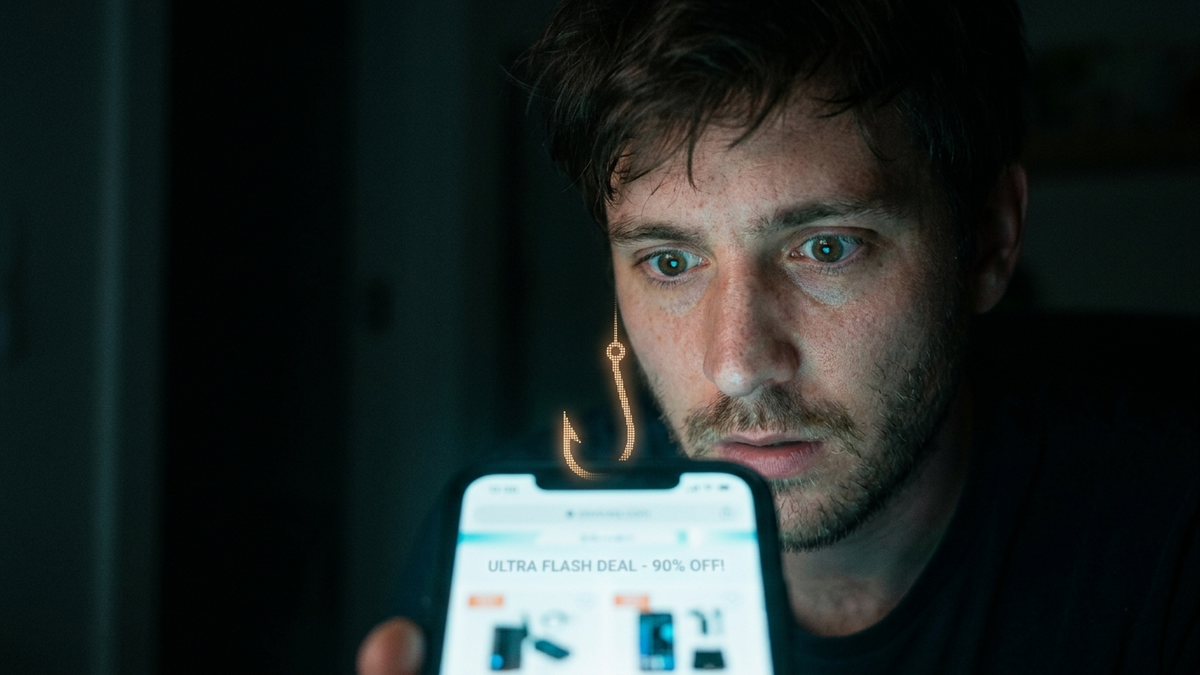
Is This Deal Too Good to Be True? A Guide to 2026 Retail Scams
Quick Answer (TL;DR)
- AI-powered scams are here: Expect hyper-personalized phishing emails and voice cloning that perfectly mimics trusted family members or your bank, making old verification methods obsolete.
- "Ghost Stores" are the new normal: Scammers build and tear down fake e-commerce websites in hours, using AI-generated reviews to look legitimate. By the time you realize you've been had, the site is gone.
- Payment methods have no "undo" button: The biggest danger is being pushed towards instant, non-reversible payments. Scammers love Zelle, Venmo, and crypto because once you send the money, it's gone forever with no fraud protection.
Introduction
Alright, let's cut the crap. I've been in the cybersecurity trenches for 15 years, pulling people's data out of the fire and watching scammers get richer and smarter. The game has changed. The goofy emails from a long-lost prince offering you millions? That's child's play now. The scams we're seeing today, and the ones that will dominate by 2026, are surgical, psychologically brilliant, and powered by artificial intelligence that can create a fake online store faster than you can make a cup of coffee.
This isn't a guide for your grandma who still has a flip phone. This is for you. You're smart, you're online all the time, and you think you can spot a scam a mile away. That confidence is exactly what they're banking on. They don't target the ignorant anymore; they target the distracted, the busy, and the deal-seekers. This guide is your wake-up call. We're going to break down exactly how these new-wave scams work, why your brain is wired to fall for them, and the practical, no-fluff steps you need to take to keep your wallet locked down.
The New Psychology: Why Your Brain Gets Hacked First
Before we talk about any tech, you need to understand this: scammers don't hack systems, they hack people. Your brain runs on ancient software full of bugs, and criminals have the exploit manual. The primary weapons they use haven't changed in a thousand years: urgency, scarcity, authority, and social proof. What's changed is how they deploy them with terrifying precision. Urgency is no longer just a "SALE ENDS FRIDAY!" banner. It's a text message showing a fraudulent charge, demanding you log in *right now* via their link to stop it. The ticking clock isn't on a deal; it's on your financial security.
Scarcity isn't about a limited-edition sneaker. It's about an AI-driven ad campaign that knows you've been searching for a specific sold-out graphics card, then serves you an ad for a "secret warehouse find" with only two left in stock. They create the supply to match your specific demand. Authority isn't a badly photoshopped FBI logo anymore. It's a deepfaked video of a respected financial expert seemingly endorsing a sketchy crypto platform, or an AI-cloned voice of your CEO asking for an urgent wire transfer. The signals of trust we've relied on are being systematically poisoned.
The most insidious trick is the weaponization of social proof. Scammers use bot farms to flood their fake product pages with thousands of five-star reviews, complete with AI-generated photos and realistic-sounding text. They'll overwhelm Facebook and Instagram comment sections with fake positive testimonials. Your natural instinct to trust the crowd is turned against you. This creates a state of cognitive overload; you're hit with so much seemingly positive information and so much pressure that your critical thinking shuts down. You make a decision based on emotion—the fear of missing out—which is exactly what they want.
Phishing Evolved: AI Voice Scams & Hyper-Personalized Lures
Forget everything you think you know about phishing. The advice to "check for spelling errors" is dangerously outdated. By 2026, the amateur hour is over. The new wave of phishing is called spear phishing, and it's powered by AI that does reconnaissance on you personally. The scammer's software scrapes your LinkedIn for your boss's name and job title, your Instagram for details about your recent trip to Italy, and your Facebook for your friends' names. The result is a perfectly crafted email that doesn't just say "Dear Customer," it says, "Hi John, hope you enjoyed the pasta in Rome! Bill from Accounting asked me to follow up on the Q3 server invoice. Can you approve the attached ASAP?" It's specific, it's contextual, and it's brutally effective.
The real nightmare, however, is vishing (voice phishing) using AI voice cloning. All a scammer needs is a few seconds of your audio from a social media video, a voicemail, or even a customer service call. They feed this into an AI model that can replicate your voice, or the voice of a loved one, with stunning accuracy. You won't get a call from a robot; you'll get a call from "your son" in a panic, saying he's been in an accident and needs you to wire him money immediately. The voice, the intonation, the emotion—it will all sound exactly right. This tactic bypasses all logical defenses and hits you straight in the heart.
How do you fight a scam that sounds like your own mother? You need new protocols. Never trust an unsolicited email link or attachment, no matter how convincing it seems. If your bank emails you, close the email and log in to your bank's website directly by typing the address yourself. For voice calls, you must have a pre-established "duress word" or a challenge question with close family members for any urgent financial request. If your "daughter" calls asking for money, you ask, "What's our safe word?" If they hesitate, it's a scam. This isn't paranoia; it's the new standard for digital survival.
💡 Expert IT Tip: Go one step further with your email security. Use an email alias service like SimpleLogin or AnonAddy. These services let you create a unique, random email address for every single website you sign up for (e.g., `amazon.random-chars@yourdomain.com`). All emails still come to your main inbox, but if you start getting phishing emails sent to your Amazon alias, you know with 100% certainty that Amazon had a data breach or sold your information. It's the ultimate early-warning system and lets you shut down a compromised alias instantly.
The Rise of the "Ghost Store": E-commerce That Vanishes
The "Ghost Store" is the culmination of every scammer's dream. It's a perfectly functional, beautiful-looking e-commerce website that is created in minutes, runs an aggressive ad campaign for a few days, and then disappears from the internet forever. They aren't selling products; they're harvesting your money and your credit card information. They use platforms like Shopify with pre-made templates, steal high-quality product photos from legitimate brands, and use AI to write all the product descriptions and marketing copy. The cost and time to launch one of these is practically zero.
Here's the lifecycle of a ghost store: A scammer sees a trending product on TikTok, like a portable blender or a special kind of lamp. They register a plausible-sounding domain name like "GlowLampDirect" or "ProBlendGo." Within an hour, they have a full site up, offering the product for 50% off the usual price. They then pump a few hundred dollars into targeted Facebook, Instagram, and TikTok ads, hitting people who have shown interest in that exact product. The orders flood in. For 48-72 hours, they collect payments and, more importantly, full credit card details (name, number, CVV). Then, poof. The website goes offline, the domain is abandoned, and the social media pages are deleted. You never get your product, and a month later, your credit card details are being used to buy gift cards in another country.
So how do you spot a ghost? The signs are subtle. The prices are always a little too good to be true. The "Contact Us" page will have a generic form but no physical address or phone number. All the social media icons on the site might just link to the social media homepage, not to an actual company profile. If they do have a profile, it was likely created last week and has thousands of followers but almost zero engagement (comments, shares) on its posts. These are bots. The sense of urgency is overwhelming, with countdown timers on every page pressuring you to buy now. Trust your gut. If a store feels slightly "off," it is.
Humanize your text and bypass any AI detector instantly with Undetectable AI.
BYPASS AI DETECTION NOW💡 Expert IT Tip: Your best weapon against ghost stores is a domain age checker. Before you buy from any new online store, copy the website's address (e.g., `www.scamstore.com`) and paste it into a WHOIS lookup tool like `whois.domaintools.com`. It will tell you the exact date the domain was registered. If it was created in the last few days, weeks, or even months, run away. Legitimate, established businesses have domains that are years old. This single check can save you from 99% of ghost store scams.
Payment Scams 2.0: The Danger of "Instant and Irreversible"
The single biggest shift that enables modern retail scams is the move away from traditional payment methods. Credit cards were a huge pain for scammers. They have robust fraud protection, chargeback mechanisms, and a paper trail. If you got scammed, you could call your bank and, in most cases, get your money back. Scammers know this, so their primary goal in any con is to push you onto a payment platform that acts like digital cash: instant, untraceable, and absolutely irreversible.
Peer-to-peer (P2P) payment apps like Zelle, Venmo, and Cash App are a goldmine for criminals. These services are explicitly designed to send money between people who trust each other, like splitting a dinner bill with a friend. They have little to no buyer protection for commercial transactions. A scammer on Facebook Marketplace will insist you pay them with Zelle for that used iPhone before they ship it. They'll create a sense of urgency, saying someone else is about to buy it. Once you send that money, it is gone forever. You have no recourse. Complaining to your bank or Zelle is useless; you authorized the payment.
QR codes are another massive vulnerability. You see them everywhere now—on restaurant tables to view a menu, on parking meters to pay for a spot. Scammers are printing their own QR code stickers and simply placing them on top of the legitimate ones. You scan what you think is the parking meter's code, it takes you to a convincing-looking payment page, and you enter your card details or approve a payment. You've just sent your money directly to a thief's anonymous account. The same goes for any "deal" that demands payment in cryptocurrency. Bitcoin and other cryptos are the perfect criminal tool: they're largely anonymous and transactions cannot be reversed for any reason. If a seller is pushing you to pay in crypto, it is a 100% guaranteed scam, every single time.
Your Digital Armor: A Practical, No-BS Defense Strategy
Enough with the horror stories. Let's talk about defense. The best security software in the world is useless if you don't change your mindset. You need to adopt a "Zero-Trust" policy for your digital life. This means you don't automatically trust any unsolicited communication. Got an email from Netflix about a billing issue? Don't click the link. Open a new browser tab, type in `netflix.com` yourself, and log in to check for any alerts. Got a text from FedEx with a tracking link? Don't tap it. Go to the official FedEx website and enter the tracking number there. Always verify through a separate, known-good channel.
Next, you need the right tech stack. This is non-negotiable. First, get a real password manager like Bitwarden (it's free and open-source) or 1Password. Every single online account must have a long, unique, randomly generated password. If one site gets breached, the thieves can't use that password to get into your email, bank, and social media. Second, enable Multi-Factor Authentication (MFA) everywhere you can, but do it right. Do not use SMS/text message for your codes. Scammers can swap your SIM card, effectively stealing your phone number and all your codes. Use an authenticator app like Google Authenticator or Authy, which is tied to your physical device, not your number.
Finally, implement some hard-and-fast behavioral rules. For any online deal that seems amazing and time-sensitive, enforce a mandatory 24-hour cooling-off period. Scams rely on impulse. After a day, the emotional urgency will have faded, and you'll be able to see the red flags you missed. Another powerful trick is the reverse image search. If you see a product on an unfamiliar site, take a screenshot and use Google Lens or TinEye. You'll often discover the image was stolen from a major retailer's website or is just a generic product from AliExpress being sold at a 500% markup. This simple check shatters the illusion of a unique, high-quality boutique store.
💡 Expert IT Tip: This is a pro move. Freeze your credit with all three major credit bureaus: Equifax, Experian, and TransUnion. It's free to do and free to unfreeze. A credit freeze is like putting a bouncer in front of your financial identity. It prevents anyone, including you, from opening a new line of credit in your name. If a scammer steals your Social Security Number and personal info, they still can't open a credit card or get a loan with your identity because the lender won't be able to pull your credit report. You can temporarily "thaw" it in minutes when you actually need to apply for credit yourself. It's the ultimate defense against identity theft.
Conclusion
The battlefield has moved online, and the currency is your trust. The scams of 2026 won't be clumsy, obvious attempts. They will be sophisticated, AI-driven campaigns that know your psychological weaknesses better than you do. They will use your own voice against you, create entire fake businesses to lure you in, and exploit the very payment systems designed for our convenience.
Remember that technology is just the delivery mechanism. The core of the con—preying on greed, fear, and urgency—is as old as time. Your best defense isn't a fancy antivirus program, though you should have one. It's a healthy, practiced skepticism. It's the discipline to pause when you feel rushed. It's the habit of verifying information through a channel you control.
Don't let the fear of missing out on a deal cost you your savings, your identity, or your peace of mind. The next time you see an offer that seems too good to be true, it is. Every single time. Stop, think, and verify. That simple process is the strongest armor you will ever have.
Don't wait for the headlines. Our Private Telegram Channel delivers real-time AI security updates and digital wealth strategies before they go viral. Stay protected. Stay ahead.
⚡ JOIN THE 1% NOW🧰 Try Our Free Tools & Calculators
No sign-up required. Instantly check risks, analyze AI text, or calculate your digital finances.