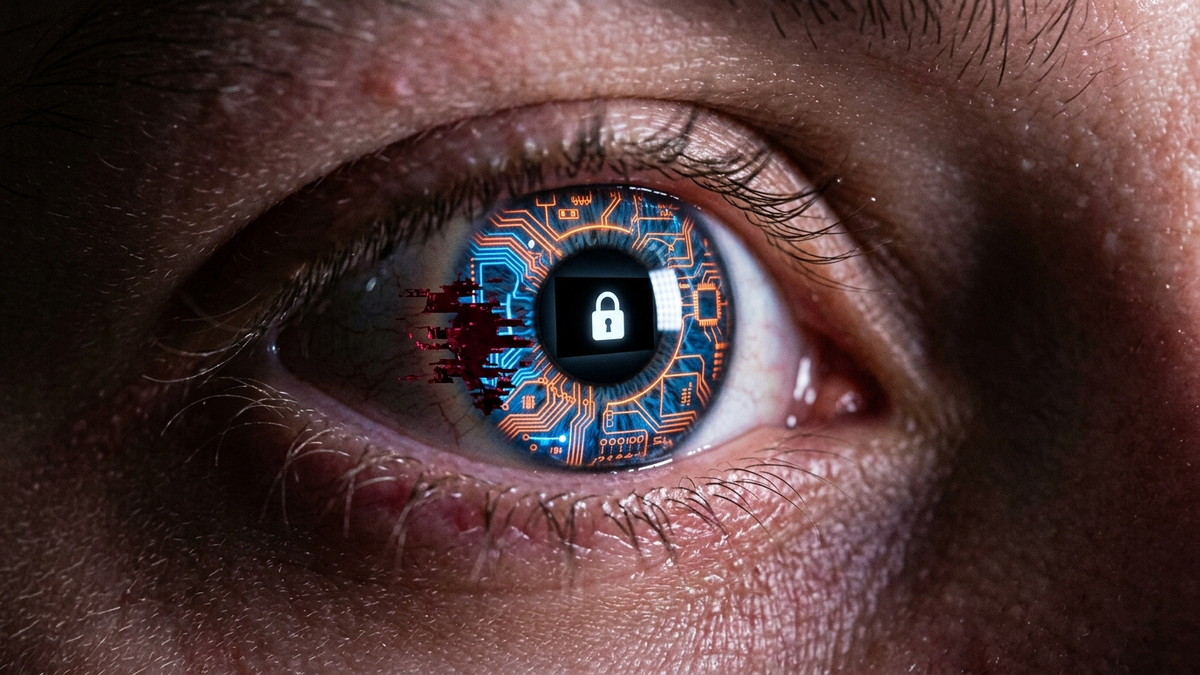
Neural Link Privacy: Will Hackers Be Able to Read Your Thoughts?
Quick Answer (TL;DR)
- No, not directly like a movie. Hackers won't be able to "watch" your thoughts. They would intercept raw neural data, which requires massive AI processing to interpret into anything meaningful, like motor intentions or emotional states.
- The biggest risks are the connected devices. Your smartphone and the external 'Link' processor are the prime targets. Hacking the app or its wireless connection is far easier than hacking the implant itself.
- The real danger is manipulation, not just reading. The scarier threat is a hacker "writing" signals to your brain, potentially causing sensory distortion, emotional manipulation, or even physical pain through a new kind of ransomware.
Introduction: Let's Cut the Sci-Fi Hype
Alright, let's have a real talk. You've seen the headlines and the futuristic demos. Neuralink, and brain-computer interfaces (BCIs) in general, promise a world where we can control computers with our minds and cure debilitating neurological diseases. It's incredible stuff. But my job for the last 15 years hasn't been to marvel at the cool new tech; it's been to figure out how bad guys will break it and ruin people's lives. And when the "device" is hardwired into your central nervous system, the stakes are a little higher than a stolen credit card number.
Forget the Hollywood fantasy of a hacker instantly playing your memories on a screen. That's not how this works. The reality is both less cinematic and infinitely more terrifying. We're not talking about stealing a file; we're talking about compromising the very hardware that runs your consciousness. The question isn't just "Can they read my thoughts?" The real questions are: What data can they actually get? How could they get it? And what could they do with it once they have it?
For the next few minutes, I'm not going to give you vague warnings or corporate-speak. I'm going to walk you through the attack vectors, the real-world vulnerabilities, and the nightmare scenarios as I see them from the trenches of cybersecurity. This is your brain we're talking about. It's the last truly private place you have. Let's discuss what it's going to take to keep it that way.
Section 1: The Attack Surface - Every Connection is a Weakness
In cybersecurity, we have a concept called the "attack surface." It's the sum of all the different points where an unauthorized user can try to get in. For your laptop, that's the Wi-Fi, the USB ports, the software you install, and the emails you open. With Neuralink, the attack surface becomes terrifyingly personal. It's not a single device; it's an ecosystem, and every link in that chain is a potential point of failure. Let's break down the four main areas a hacker will target, from easiest to hardest.
First, and most obviously, is your smartphone and the Neuralink app. This is the low-hanging fruit. It's the user interface, the control panel for your brain implant. A hacker doesn't need to be a neuroscientist to compromise this; they just need to be a regular cybercriminal. They can use classic techniques: a phishing email that tricks you into installing a malicious app, exploiting a vulnerability in your phone's operating system, or a "man-in-the-middle" attack on a public Wi-Fi network to intercept data between the app and the cloud. If they own your phone, they effectively hold the keys to the kingdom. They can see the diagnostic data, potentially alter settings, and intercept any unencrypted information passing through it. Think of your phone as the front door to your mind—it's the most visible and most frequently attacked entry point.
The second target is the external "Link" device—the small pod that sits behind your ear and communicates with the implant. This device is the bridge. It wirelessly receives raw data from the internal implant and sends it to your phone. Its primary connection is Bluetooth or a similar proprietary wireless protocol. These protocols are a constant battleground for security researchers. Flaws are discovered all the time. A sophisticated attacker could exploit a vulnerability in this wireless link to intercept the raw stream of neural data directly, bypassing the phone entirely. This is like a card skimmer at a gas pump; it grabs the data in transit before it even gets to the secure processor. This is a much harder attack to pull off than just hacking a phone, but it's a direct line to the raw brain data stream.
Third, we have Neuralink's cloud infrastructure. Every bit of data from your brain—your neural patterns, your usage data, your diagnostic logs—has to be sent somewhere for processing and storage. This means Neuralink will operate massive server farms. A breach of these servers would be catastrophic. It's the equivalent of the Equifax breach, but instead of your social security number, it's a database of neural signatures from thousands of users. A state-sponsored actor or a high-level hacking group would absolutely target this. They wouldn't be hacking you individually; they'd be stealing the entire vault, giving them a dataset of unimaginable power to analyze for patterns, vulnerabilities, or even to train AI models to decode human thought on a mass scale.
Finally, there's the implant itself. This is the holy grail for an attacker and the hardest to compromise. It's physically inside your skull, so direct hardware attacks are off the table without major surgery. The only viable vector is a remote firmware attack. This would likely involve pushing a malicious, but seemingly legitimate, software update through the entire chain—from the app to the Link device to the implant. If a hacker could achieve this, it's game over. They would have root access to the device embedded in your brain. This is the ultimate persistence. You can't just "reinstall windows" on your brain. A compromised implant could be a permanent backdoor into your neural activity.
Section 2: Decoding the Data - What "Reading Thoughts" Actually Means
This is where we need to be crystal clear. When a hacker "reads your thoughts," they are not seeing a high-definition video of your memories. They aren't hearing your internal monologue as clear as a phone call. What they are getting is a firehose of raw, chaotic electrical data from thousands of neurons firing at once. Think of it less like a movie and more like the raw data from a seismograph during an earthquake. To a layperson, it's just a bunch of squiggly lines. But to a trained seismologist, those squiggles tell a story about magnitude, depth, and location. It's the same with neural data.
In the beginning, a hacker's capabilities would be limited to interpreting motor intentions and simple sensory data. The initial use for Neuralink is to help paralyzed individuals control a cursor or a keyboard. This works by the system learning to recognize the specific cluster of neural signals that corresponds to the *intention* to move a mouse to the left, or to click. If a hacker intercepted this data stream, they wouldn't know you're thinking about your vacation, but they could absolutely see the command "move cursor up" before it even happens. They could record the neural patterns you use to type your password on a virtual keyboard. This is the most immediate and practical threat: the theft of credentials and control commands directly from the source.
The next level up is decoding emotional and physiological states. Your brain activity shifts dramatically based on your emotional state. Fear, anger, arousal, stress—these all have distinct (though complex) neural signatures. An attacker with access to your data stream could run it through an AI model trained to recognize these patterns. They wouldn't know *why* you're suddenly stressed, but they would know that you are. Imagine an advertiser knowing the exact moment their ad causes a spike in your brain's "desire" centers. Or a hostile negotiator in a business deal knowing, in real-time, that their offer is causing you extreme anxiety, giving them a massive upper hand. This isn't mind reading; it's advanced, non-consensual emotional surveillance.
The final, most speculative frontier is the reconstruction of complex thoughts and images. This is the sci-fi scenario, but it's not impossible. Researchers are already using fMRI scans (a much cruder tool than Neuralink) and advanced AI to reconstruct blurry images of what a person is looking at. With the high-resolution data from a BCI, a sufficiently powerful AI, trained specifically on *your* brain over months or years, could potentially start to piece together more abstract concepts. It might be able to reconstruct a fuzzy image of a face you're thinking of, or identify a specific word you're repeating in your mind. This is the long-term danger. The attacker wouldn't be stealing a single thought, but rather, they'd be building a predictive model of your entire cognitive process. They'd have the ultimate intelligence file on how you think.
💡 Expert IT Tip: The concept of "Differential Privacy" will be critical for BCI security. This is a cryptographic method where noise is intentionally added to a dataset before it's analyzed. For Neuralink, this could mean that their cloud servers receive data that's statistically useful for research (e.g., "70% of users showed a positive response") but is mathematically scrambled in a way that makes it impossible to reverse-engineer the neural data of any single individual. Users should demand to know if their BCI provider uses these techniques to anonymize their cloud-stored brain data.Section 3: The Nightmare Scenarios - It's Not the Reading, It's the Writing
Everyone is worried about hackers reading their minds. Frankly, that's a failure of imagination. As a security professional, I can tell you that passive data theft is often just the first step. The real damage happens when an attacker can actively *change* things on the target system. When the target system is your brain, the possibilities are horrifying. The ability for a BCI to "write" signals back to the brain is essential for its therapeutic potential—like restoring a sense of touch to a prosthetic limb—but it's also the attack vector for a whole new class of cyber-assault.
The most straightforward nightmare is Neural Ransomware. We see ransomware every day where hackers encrypt your files and demand money for the key. Now, imagine this applied to your biology. An attacker who gains write-access to your implant could trigger signals that induce constant, low-level pain, a feeling of nausea, a persistent high-pitched sound (tinnitus), or visual distortions. A message then appears on your phone: "We have control of your sensory input. Pay 50 Bitcoin, and we'll make it stop." This is no longer about data; it's about holding your physical well-being hostage. The psychological pressure to pay would be immense.
A more subtle but equally sinister threat is subliminal manipulation. A hacker wouldn't need to send a signal that says "Buy Product X." That would be too obvious. Instead, they could subtly stimulate the neural circuits associated with desire, trust, or positive emotion whenever you encounter a specific brand, a political candidate's face, or a piece of propaganda. It's like a pop-up ad for your subconscious. You wouldn't even know it's happening. You would just feel an unexplainable preference for one thing over another, your free will silently eroded by malicious code. This could be used to rig elections, manipulate stock markets, or simply create the world's most effective advertising platform.
Protect your identity and browse privately with Surfshark One - the all-in-one security suite.
GET 60% OFF SURFSHARK NOWThen there's the weaponization of your own biology. This is sensory and emotional hijacking. An attacker could feed you false sensory information. Imagine a soldier in the field whose implant is hacked to show them phantom enemies on the battlefield, or to suppress the sound of an approaching vehicle. Imagine a surgeon whose device is triggered to induce a hand tremor at a critical moment. On an emotional level, a hacker could trigger the neural correlates of intense fear or paranoia at will. They could effectively use your own brain chemistry as a weapon against you, incapacitating you without firing a single shot. This turns a therapeutic device into a tool of coercion and control.
Finally, we have the ultimate threat: lethal attacks. Some neurological conditions, like epilepsy, are caused by uncontrolled "storms" of electrical activity in the brain. If a BCI has the ability to write signals with enough precision and power, it's conceivable that a hacker could trigger a massive, system-wide seizure. For a device intended to regulate neural activity, the potential to disrupt it in a catastrophic way is always present. This is the digital equivalent of a remotely triggered assassination. It may seem far-fetched, but we have to plan for worst-case scenarios, because in my line of work, the worst-case scenario has a nasty habit of becoming reality.
Section 4: Building the Brain's Firewall - A Multi-Layered Defense
So, how do we stop this dystopian future? We can't just throw up our hands and ban the technology. The potential for good is too great. The answer, as always in cybersecurity, is a defense-in-depth strategy. You don't just have one lock on your front door; you have a deadbolt, a security system, and a dog. We need to build the same multi-layered security model for the brain.
First, security has to start at the silicon level with hardware-based encryption and secure enclaves. The communication between the internal implant and the external Link device cannot be optional encryption; it must be mandatory, unbreakable, end-to-end encryption. The cryptographic keys used for this should be stored in a "secure enclave" on the device's chip, which is like a tiny digital vault that is physically isolated from the main processor. Even if the device's main software is compromised, it can't access the keys. This ensures that the raw data stream from your brain is just meaningless static to anyone who intercepts it without the corresponding key, which should never leave the secure hardware.
Second, we need to rethink connectivity and adopt principles from high-security industrial systems. This means implementing strict access control and air-gapping concepts. The device should operate on a "principle of least privilege," meaning it only has the permissions it absolutely needs to function. There should be a user-controlled "lockdown mode" that physically disables all wireless radios on the external device, forcing any updates or diagnostics to be done via a direct, physical connection. This "air-gap" philosophy prevents remote attacks. You, the user, must have a big, red, unmistakable "off switch" that severs the connection between your brain and the outside world.
Third, we must innovate in authentication. Passwords and PINs are a joke when the device can read your motor intentions to type them. The future of BCI security is continuous, passive biometric authentication using a "brain-print." Your brain's response to a specific stimulus—a flash of light, a sound, a mental image—is unique. The system could be constantly checking this background neural signature. If the live brain-print doesn't match the registered owner's, the device could instantly lock down, assuming it has been compromised or is being used by an unauthorized person. It's like two-factor authentication where the second factor is your own unique consciousness.
Finally, the burden of security can't just be on the user. Neuralink and other BCI companies must be held to an unprecedented standard of transparency and scrutiny. This means radical code auditing and massive bug bounties. Their source code shouldn't be a secret; it should be open to review by trusted, independent security researchers. They need to run the world's most aggressive bug bounty program, offering millions of dollars to ethical hackers who find and report vulnerabilities. The cost of a bug bounty is nothing compared to the cost of a single brain being hacked. We need to create a culture where these devices are seen not as consumer electronics, but as life-sustaining medical equipment with the security requirements of a nuclear launch system.
💡 Expert IT Tip: A practical defense is to use a dedicated, hardened device solely for your BCI interface. Don't use the same smartphone you use for social media and email. Purchase a secondary, low-cost phone (like a Google Pixel and install a security-focused OS like GrapheneOS), and *only* install the Neuralink app on it. This device never connects to public Wi-Fi, you don't use it for browsing, and you keep it physically secured. This drastically reduces the attack surface by isolating the "control panel" for your brain from the digital cesspool of the internet.Section 5: The Law and Your Mind - Who Owns Your Thoughts?
The technical defenses are only half the battle. The biggest fights over Neuralink won't happen in a server room; they'll happen in a courtroom. The legal and ethical frameworks for this technology simply do not exist yet, and we are sprinting into this new era completely unprepared. We're about to have philosophical debates from a college ethics class become urgent matters of public policy, and if we get it wrong, the consequences are permanent.
The most fundamental question is data ownership and cognitive liberty. Who owns the raw data generated by your brain? Is it you? Is it Neuralink, because they own the hardware and software that collects it? If your data is stored on their cloud, do they have the right to mine it for insights, sell anonymized datasets to researchers, or turn it over to the government? We need new laws, maybe even a constitutional amendment, that explicitly defines "cognitive liberty"—the absolute right to the privacy and control of one's own mental processes. Your brain data cannot be treated like your search history or your social media posts. It must have a special, protected legal status. Without this, you are not the customer of the BCI company; your consciousness is the product.
This leads directly to the problem of governmental and corporate surveillance. Imagine a future where law enforcement can issue a warrant for your neural data. They could try to argue for "pre-crime" detection, searching for patterns of aggressive thought or criminal intent. Your employer could demand access to your data as a condition of employment to monitor your focus and emotional state. An insurance company could use it to set your premiums based on your neurological health or risk-taking thoughts. This turns a tool of liberation into a tool of ultimate oppression, creating a surveillance state that extends not just to your home, but to the inside of your own skull.
Furthermore, we have to address the issue of liability and accountability. If your BCI is hacked and causes you physical or psychological harm, who is responsible? Is it the hacker? Is it the company for having a security flaw in their product? Is it you for not securing your phone properly? The legal precedent for a "cyber-assault" of this nature is non-existent. We need a clear chain of liability. Companies that produce these devices must be held to the highest standard of care, similar to aircraft manufacturers. If a flaw in their design leads to a catastrophic failure, they must be held accountable. Without that legal and financial pressure, companies will always be tempted to cut corners on security to rush a product to market.
Finally, there needs to be an international regulatory body for neuro-technology. We have the FDA to ensure drugs are safe and effective. We need a similar, global organization—a sort of "Cyber-FDA"—that sets minimum security standards for any device that interfaces with the human brain. This body would conduct mandatory penetration testing, audit code, and certify a device as "cyber-secure" before it can be implanted. Technology is moving too fast for any single country's laws to keep up. We need a unified, global approach to ensure that a basic set of digital rights and security protocols are respected, no matter where the company or the user is located.
Conclusion: The Final Frontier is You
We are standing at a monumental crossroads. Brain-computer interfaces like Neuralink have the potential to bring about a new golden age for humanity, curing diseases and unlocking human potential in ways we can barely comprehend. But if we are naive about the risks, if we treat this profound technology with the same careless attitude we've applied to social media or the Internet of Things, we risk creating a world of unimaginable control and suffering.
The security of your mind cannot be an afterthought. It must be the foundation upon which this entire field is built. It requires a new social contract between tech companies, governments, and every one of us. We need to demand security by design, radical transparency, and laws that protect our cognitive liberty as a fundamental human right.
So, will hackers be able to read your thoughts? The simple answer is no. The real answer is that they will try to do much, much worse. The battle for the last frontier of privacy isn't being fought in cyberspace or on a distant planet. It's about to be fought inside your head. We had better be ready.
Don't wait for the headlines. Our Private Telegram Channel delivers real-time AI security updates and digital wealth strategies before they go viral. Stay protected. Stay ahead.
⚡ JOIN THE 1% NOW🧰 Try Our Free Tools & Calculators
No sign-up required. Instantly check risks, analyze AI text, or calculate your digital finances.