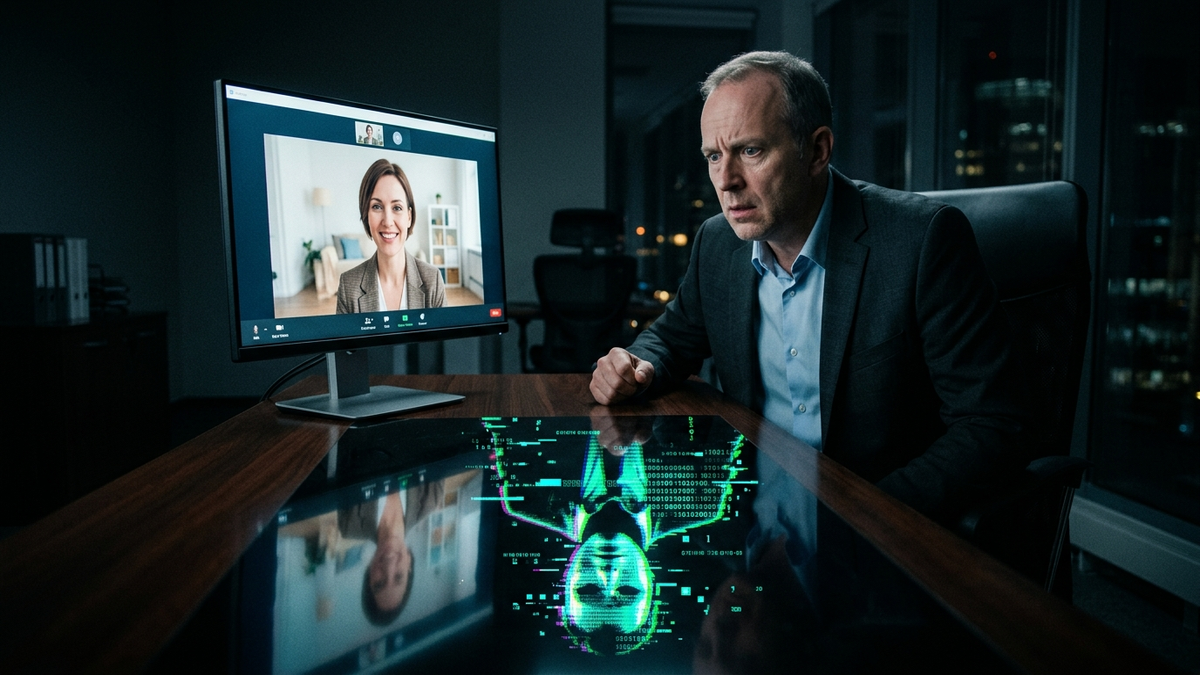
The 2026 Guide to Spotting Synthetic Identities in Remote Job Interviews
Quick Answer (TL;DR)
- Aggressively Vet the Digital Footprint: A real person has a messy, years-long digital history. A synthetic identity is often too new, too perfect, or has glaring inconsistencies. Verify their online presence before the first call.
- Mandate Live, Interactive Technical Tests: Make candidates share their screen and code, debug, or configure a system in real-time. This shatters pre-recorded answers and deepfake puppets.
- Scrutinize Video and Audio for AI Artifacts: Look for unnatural blinking, mismatched lighting, audio-video sync lag, and a lack of spontaneous, non-verbal cues. Trust your gut; if it feels off, it probably is.
Introduction: Your New Hire Might Be a Ghost
Alright, let's cut the corporate nonsense. You're hiring for a critical remote role. You get a resume that looks like it was written by a god—perfect experience, stellar qualifications, Ivy League education. You're ready to hire them on the spot. Hold on. There's a damn good chance that "person" doesn't exist. By 2026, this isn't a rare problem; it's a full-blown security crisis hitting HR and IT departments like a freight train. We're not talking about someone fudging their resume anymore. We're talking about completely fabricated identities, stitched together from stolen data and powered by AI, designed for one purpose: to get inside your network.
These aren't just job seekers. They're corporate spies, ransomware deployment teams from North Korea, or organized criminals looking to steal your customer data and intellectual property. The job interview is their way of picking the lock on your front door. They aren't trying to earn a paycheck; they're trying to own your systems. I've spent 15 years cleaning up the messes left by people who fell for these scams. This guide is the brutal, field-tested playbook you need to stop them before they get a foothold. Forget what you thought you knew about hiring. This is digital warfare, and the interview is your battlefield.
Section 1: The Anatomy of a Digital Ghost
First, you need to understand what you're up against. A synthetic identity isn't just a fake name like "John Smith." It's a sophisticated fabrication. Think of it like a digital Frankenstein's monster. The creators, often state-sponsored hacking groups or crime syndicates, take a piece of real, verifiable data from one person, a piece from another, and mix it with completely fabricated information. For example, they might use a real, stolen Social Security number from a child (who won't be checking their credit report), pair it with a fabricated name, use a real address from a vacant property, and generate a fake driver's license image using AI. This creates a profile that can often pass basic, automated background checks because parts of it are technically real and tied to legitimate databases.
The goal is to create a "person" who looks legitimate enough to get past initial screening. Their resume will be flawless, tailored perfectly to your job description using AI. Their LinkedIn profile will look professional, often populated with AI-generated headshots and endorsements from other fake profiles. They build a whole ecosystem of fakery to support the primary identity. Why go to all this trouble? The payoff is massive. Once hired, this "employee" gets legitimate network credentials. They get access to internal documents, source code, customer lists, and financial systems. They can quietly plant malware, disable security controls from the inside, and exfiltrate terabytes of data before anyone even realizes the person in payroll doesn't actually exist.
By 2026, the tools to do this are cheap and widespread. Deepfake technology for video interviews, voice cloning AI, and large language models for communication are no longer science fiction; they're available on the dark web for a few hundred bucks. The synthetic candidate can "ace" a phone screen using a real-time voice cloner and a script. They can show up to a video interview as a photorealistic deepfake avatar, perfectly mimicking a human, while the real operator—who might not even speak English—pulls the strings from a keyboard thousands of miles away. Your job is to spot the seams in this digital quilt before it smothers your company.
Section 2: Pre-Interview Reconnaissance: Your First Line of Defense
You wouldn't let a stranger walk into your server room without checking their ID, so why would you let a digital unknown into a high-stakes interview without doing the same? The fight against synthetic identities begins the moment you receive the resume. You must become a digital detective. A real person's online life is messy, organic, and stretches back years. A synthetic identity is often too clean, too new, or has holes you could drive a truck through. Your first task is to hunt for these red flags before you ever waste time on a call.
Start with LinkedIn. Don't just look at their profile; dissect it. Does the profile picture look a little too perfect, like a stock photo? Use a reverse image search (like TinEye or Google Images) to see if that photo appears anywhere else online, perhaps as a model for a dentist's office. Look at their connections. Are they connected to other real, verifiable people at the companies they claim to have worked for? Or are their connections a weird mix of random profiles with no clear professional overlap? Check their activity. A real professional usually has a history of posts, comments, or likes stretching back years. A synthetic profile is often created just weeks or months before applying for jobs, with a flurry of recent, generic activity to make it look active.
Next, move beyond LinkedIn. If they claim to be a software developer, where is their GitHub or GitLab profile? A seasoned developer without a public code repository or any open-source contributions is a major red flag. If they have one, check the commit history. Is it consistent over several years, or did they upload 50 projects last Tuesday? Search their name and previous companies in professional forums, mailing lists, or sites like Stack Overflow. Real people leave traces. The absence of any such traces for someone claiming a decade of experience is highly suspicious. You're looking for the digital breadcrumbs that a genuine career leaves behind. A ghost leaves no tracks.
💡 Expert IT Tip: Use Google Dorking for advanced background checks. This is basically using advanced search operators to find specific information. Open a Google search and type `site:linkedin.com/in "Jane Doe" "Lead DevOps Engineer"`. This forces Google to only show you LinkedIn profiles with that exact name and title. You can get more specific: `"Jane Doe" AND "AWS" AND "conference" AND (2019 OR 2020)`. This searches for their name in conjunction with skills and activities from a specific time frame, helping you find evidence of a real-world presence like speaking at a conference or being mentioned in an article. A synthetic identity will almost never have this kind of deep, verifiable history.
Section 3: The Live Interview Gauntlet: Exposing the Imposter in Real-Time
This is where the rubber meets the road. The video interview is your single best chance to expose a fraud, but only if you know what to look for. By 2026, deepfake technology is scarily good, but it's not perfect. It still struggles with real-time, unscripted interaction. Your goal is to stress the system and force the cracks to show. First, pay maniacal attention to the video and audio feeds. The AI models that generate deepfakes are computationally intensive. Look for subtle signs of digital strain.
Watch their eyes. Do they blink at a normal, human rate? Sometimes deepfakes have an unnaturally low or high blink rate. Look at the edges of their face and hair. Do you see any weird, pixelated "fizzing" or artifacts, especially when they turn their head quickly? Is the lighting on their face perfectly consistent with the lighting in the room behind them? Often, a deepfake will have a face that is lit slightly differently from the background. Also, check for audio/video synchronization. Is there a consistent, tiny lag between when their lips move and when you hear the sound? This can be a dead giveaway of a real-time voice cloner or deepfake system processing the data.
Next, you must break their script. The operators behind these synthetic identities are often working from a pre-written script of answers to common interview questions. To defeat this, you need to go off-road. Ask unexpected, conversational questions. "That's an interesting painting behind you, what's the story there?" or "I see you're in Denver. Did you guys get hit by that big snowstorm last week?" A real person can answer this instantly. An imposter, especially one relying on a translator or a script, will pause. You'll notice a delay as they process the unexpected input. Their response might be overly generic or evasive. This momentary confusion is a goldmine of information. It tells you they aren't thinking on their feet; they're waiting for instructions.
Turn your scripts into professional videos automatically. Use code PAVEL20 for 20% OFF!
START CREATING WITH PICTORYFinally, and most critically, demand interaction. Ask them to do something physical and specific on camera. "Could you please pick up the book behind you and show me the cover?" or "Can you grab a piece of paper and a pen and sketch out the network architecture you just described?" A deepfake is just a video overlay on a person's face. It cannot interact with real-world objects in a way that makes sense. The operator will make an excuse—"Oh, I'm sorry, my camera is fixed," or "I don't have a pen handy." This isn't just a request; it's a liveness test. Their refusal to comply is one of the biggest red flags you can get.
Section 4: The Technical Deep Dive: Making Them Prove Their Skills
If you're hiring for a technical role—a sysadmin, a developer, a security analyst—this is your ultimate weapon. You cannot fake muscle memory. A seasoned professional has years of hands-on keyboard time that a synthetic imposter, propped up by AI and scripts, simply cannot replicate. The standard "Tell me about a time when you..." behavioral questions are useless here. You need to throw them into a live, hands-on technical challenge where there is nowhere to hide.
The key is to control the environment. Don't let them share their own screen showing their perfectly configured local machine. Instead, use a collaborative coding platform (like CoderPad or HackerRank) or, even better, spin up a fresh virtual machine in your own cloud environment (AWS, Azure, GCP) and give them SSH access. Then, give them a real-world problem. For a DevOps candidate: "Here are the credentials to a broken Nginx server. It's throwing a 502 error. You have 15 minutes. Share your screen, talk me through your troubleshooting process, and fix it." For a developer: "Here's a small codebase with a subtle memory leak. Find it and patch it. Explain your debugging methodology as you go."
Watch *how* they work. A real sysadmin's fingers will fly across the keyboard, instinctively using commands like `grep`, `tail -f`, `systemctl`, and `netstat`. They'll know the common file paths in `/var/log/` or `/etc/` without thinking. An imposter will be slow and clumsy. They'll constantly pause, likely to look up commands or get instructions from their handler. They won't be able to explain the *why* behind their actions. Ask them pointed questions during the exercise: "Why did you choose to use `awk` there instead of `sed`?" or "What's the difference between a TCP and a UDP health check in this load balancer configuration?" Their ability to have a fluid, technical conversation while simultaneously performing the task is a massive indicator of authenticity.
💡 Expert IT Tip: Create a "honeypot" problem within your technical test. This is a deliberately placed, subtle issue that looks like the main problem but is actually a red herring. For example, in a broken application, the obvious error in the log might point to a database connection, but the *real* issue is an incorrect firewall rule. A real, experienced engineer will follow a logical troubleshooting process and eventually find the true root cause. An imposter relying on a script or a quick Google search for the obvious error will get stuck on the red herring and be unable to proceed, exposing their lack of genuine problem-solving skills.
Section 5: Post-Interview Verification: Trust but Aggressively Verify
Let's say a candidate has passed all your tests. They seemed sharp, they aced the live coding challenge, and the video feed looked clean. You're still not done. The final stage is a verification process that goes far beyond the standard, checkbox-style background check, which, as we've established, synthetic identities are often designed to pass. You need to verify the human, not just the data points on their resume.
First, get serious about checking references. Don't just email the addresses they provide. Find the reference's official company contact information yourself through the company's website or LinkedIn. Call them on the phone. A real phone call is much harder to fake than an email. Don't ask generic questions like "Was John a good employee?" Ask hyper-specific, project-related questions that only a true former colleague would know. "I see John listed Project Titan on his resume from 2022. Can you tell me about the specific role he played in the migration from on-prem servers to the AWS cloud during that project?" A fake reference will give a vague, glowing review. A real one will provide concrete details, and maybe even a funny story about a late night spent fixing a server.
Next, verify their employment and education directly and independently. Do not use the phone numbers or links provided on the resume. Look up the main switchboard for "ACME Corp" yourself and ask to be transferred to HR to verify employment dates for your candidate. For university degrees, contact the registrar's office directly. Scammers often set up fake company websites and VOIP phone numbers that go to their own accomplices, creating a complete illusion of a legitimate work history. Independent verification is the only way to break through this facade.
Finally, for high-stakes roles with access to sensitive data, it's time to bring in the big guns. Use a modern identity verification service like Onfido, Jumio, or Veriff. These services require the candidate to use their smartphone to take a live photo of their government-issued ID (like a passport or driver's license) and then take a selfie. The service uses AI and human experts to analyze the security features of the ID document for tampering and uses biometric analysis to match the selfie to the ID photo, confirming the person is who they claim to be. This is the digital equivalent of asking for two forms of ID in person. It is a non-negotiable step for any role that holds the keys to your kingdom.
Conclusion: This is the New Normal
Look, the days of simply trusting a resume and a charming interview are over. Gone. The threat of synthetic identities isn't some far-off, futuristic problem; it's on your doorstep right now. These actors are sophisticated, well-funded, and relentless. They see your company's open positions not as job opportunities, but as unlocked doors to your most valuable assets. Treating your hiring process with the same rigor and skepticism as your network security protocols is no longer optional—it's essential for survival.
The strategy is simple: create friction. Every step I've outlined, from pre-interview digital forensics to live, hands-on challenges and biometric identity verification, is designed to make it harder, more expensive, and more annoying for fakers to get through. A real candidate will see these steps as thorough and professional. An imposter will see them as insurmountable obstacles and will likely withdraw their application to go find an easier target. This is an arms race. The attackers are constantly improving their AI, deepfakes, and social engineering tactics. You must be just as relentless in updating your defenses. Be paranoid. Be thorough. And trust your gut. In the world of 2026, the most dangerous threat to your company might just be the person you're about to hire.
Don't wait for the headlines. Our Private Telegram Channel delivers real-time AI security updates and digital wealth strategies before they go viral. Stay protected. Stay ahead.
⚡ JOIN THE 1% NOW🧰 Try Our Free Tools & Calculators
No sign-up required. Instantly check risks, analyze AI text, or calculate your digital finances.