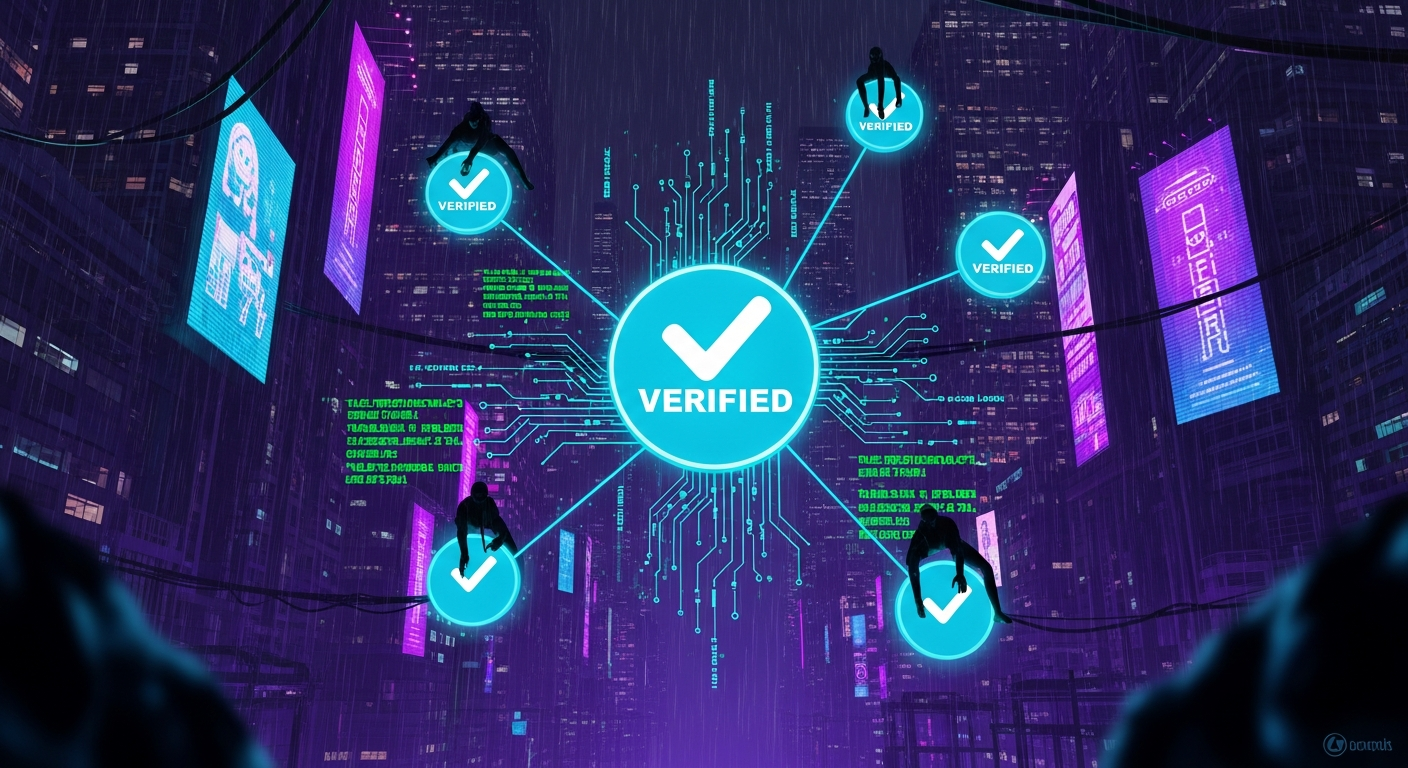
The Blue Checkmark Betrayal: How Verified Social Media Accounts Became Malware's New Trojan Horse
Quick Answer (TL;DR)
- The transition to paid subscription verification models across major social platforms has fundamentally destroyed the blue checkmark's original purpose as a definitive marker of identity and trust.
- Cybercriminal syndicates actively purchase or hijack legacy verified accounts to exploit the psychological "Authority Bias" of users, making sophisticated social engineering attacks devastatingly effective.
- These compromised profiles are acting as high-conversion distribution networks for severe threats, including session-stealing malware, crypto wallet drainers, and automated ransomware payloads.
- AI-driven automation allows hackers to use verified accounts to send thousands of hyper-personalized, malicious Direct Messages (DMs) that evade traditional spam filters.
- Protecting yourself in 2026 demands a strict Zero-Trust policy, ignoring verification badges completely, and securing digital assets with Hardware Wallets and advanced endpoint protection.
In the complex architecture of internet security, human psychology is almost always the weakest link. For more than a decade, tech giants painstakingly trained billions of users to look for a specific visual cue before trusting an online entity: the small, unobtrusive blue checkmark. Whether you were scrolling through Twitter (now X), Instagram, Facebook, or TikTok, that badge meant something profound. It signified that a multi-billion-dollar corporation had conducted background checks, verified government IDs, and confirmed that the person or brand speaking to you was authentically who they claimed to be.
However, the tectonic plates of the social media landscape have shifted violently in recent years. In a desperate bid to diversify revenue streams, platform after platform abandoned the concept of verification-as-security and adopted verification-as-a-service. Today, anyone with a prepaid debit card and a monthly subscription fee can acquire the exact same visual veneer of absolute legitimacy as a Fortune 500 company or a sitting president. This catastrophic commoditization of trust has not gone unnoticed by the global cybercriminal underground.
Threat actors, state-sponsored hacking syndicates, and sophisticated cryptocurrency scammers have quickly realized that a "verified" badge is the ultimate skeleton key for social engineering. By wrapping their malicious intent in the comforting blue glow of verification, they are effortlessly bypassing the natural skepticism of modern internet users. Welcome to the era of the Blue Checkmark Betrayal, where verified social media accounts have become the internet's most dangerous, high-converting new gateway for malware deployment.
The Evolution of the Badge: From Security Feature to Weapon
To understand the sheer scale of this threat, we must briefly look at how we arrived here. Initially, verification was introduced as an anti-impersonation tool. It was incredibly difficult to obtain, reserved exclusively for public figures, journalists, and major brands who were at high risk of being spoofed. Because it was rare, it was trusted implicitly. If a verified account messaged you with a link, your brain immediately categorized it as safe.
When the subscription model was introduced, the floodgates opened. The platforms argued that democratization of the badge would empower ordinary creators. In reality, it handed cybercriminals a massive tactical advantage. Hackers no longer needed to spend weeks crafting the perfect phishing email that would likely end up in a spam folder. Instead, they could spend $8 to $15 a month, rename their account to "Official Trust Wallet Support" or "Microsoft Security Alerts," and immediately begin interacting directly with victims on public timelines.
Worse still, platforms often prioritize replies and content from verified users in their algorithmic feeds. This means that when a user complains about a locked account or a software bug, the first reply they see is often from a malicious, paid-verified account offering "immediate technical assistance" through a highly toxic phishing link.
The Psychology of the Attack: The Halo Effect and Authority Bias
Why is this attack vector so devastatingly effective, even against tech-savvy users? It comes down to cognitive biases, specifically the Authority Bias and the Halo Effect. In a digital environment saturated with information, the human brain relies on heuristics—mental shortcuts—to make split-second decisions about what is safe.
The verified badge acts as a powerful heuristic. When an internet user sees that checkmark, the Halo Effect kicks in: they subconsciously attribute positive qualities like honesty, security, and official capacity to the account, regardless of the actual content being posted. When a verified account tweets an urgent link about a "critical zero-day patch" or a "limited-time exclusive NFT mint," the victim's brain processes the authority of the badge first, effectively muting their critical thinking skills regarding the URL itself.
Furthermore, attackers frequently target and hijack legacy verified accounts. These are accounts belonging to local politicians, retired athletes, or dormant tech blogs that were verified under the old, stringent rules. Hackers breach these accounts, rebrand them entirely, and launch massive campaigns. Because the account has a long history and an older creation date, it bypasses the basic automated security flags that social networks use to detect new spam accounts.
Anatomy of a Verified Malware Campaign in 2026
The lifecycle of a modern verified malware attack is a masterclass in automated social engineering. It relies on a meticulously planned funnel designed to convert misplaced trust into a successful system infection. The process generally follows a strict, highly efficient operational flow.
Phase 1: Acquisition and Automation. Cybercriminals rarely operate a single account. They purchase hundreds of verified accounts using stolen credit cards or crypto-funded virtual cards. They then connect these accounts to customized AI bots. These bots are programmed to scan social media platforms 24/7 for specific keywords like "hacked," "stolen crypto," "support," or trending topics related to major software releases.
Phase 2: The Ambush. Once the AI identifies a target—for example, a user complaining that their MetaMask wallet isn't syncing—the verified bot strikes within seconds. It replies publicly or slides into the user's Direct Messages (DMs) masquerading as an official support agent. The AI uses natural language processing to generate a highly empathetic, personalized message. "We are sorry you are experiencing this sync issue. Please visit our official migration portal to secure your assets."
Phase 3: Payload Delivery and Execution. The victim, relieved that a "verified representative" is helping them so quickly, clicks the provided link. This link does not go to a legitimate portal. It leads to a pixel-perfect clone of the targeted service. The moment the user enters their seed phrase, signs a malicious smart contract, or downloads the "diagnostic tool," the trap snaps shut. The malware deploys silently in the background.
The Dark Payload: Infostealers, Drainers, and Session Hijacking
The software distributed through these verified gateways is rarely designed to crash a computer; it is designed for silent, maximum financial extraction. The most prevalent threat in this ecosystem is the deployment of advanced Infostealers. Malware families like RedLine, Raccoon Stealer, and their newer variants are engineered to quietly scrape the victim's browser data. They extract saved passwords, auto-fill credit card data, and deeply buried cryptocurrency private keys.
One of the most dangerous capabilities of modern infostealers is Session Token Theft. Even if a user has robust Two-Factor Authentication (2FA) enabled on their accounts, an infostealer can bypass it completely. By stealing the active session cookies directly from the browser, the hacker can clone the victim's session on their own machine. The platform believes the hacker is the legitimate user who has already passed the 2FA check, granting them instant, unfettered access to emails, bank accounts, and corporate networks.
In the Web3 space, verified accounts are the primary vector for Crypto Drainers. These are malicious scripts disguised as legitimate decentralized applications (dApps). A verified account might promote a "free community airdrop." When the victim connects their wallet and clicks "Claim," they are actually signing a hidden transaction that transfers their entire balance of Ethereum, Solana, or NFTs directly to the attacker's wallet. Because the link was shared by a verified source, the victim drops their guard exactly when they need it most.
Cybercriminals are bypassing software security. The only true defense against crypto drainers and infostealers is taking your private keys completely offline. Secure your assets with the world's leading hardware wallet.
GET YOUR HARDWARE WALLET NOWAI Deepfakes and the Future of Verified Scams
As we push further into the late 2020s, the intersection of verified accounts and Artificial Intelligence is creating a nightmare scenario. Hackers are no longer relying solely on text-based phishing. By hijacking the verified accounts of prominent CEOs, tech founders, or crypto influencers, attackers are now deploying AI-generated video and audio deepfakes.
Imagine seeing a live stream or a video tweet from a verified account belonging to a famous tech billionaire, perfectly mimicking their voice and mannerisms, announcing a massive cryptocurrency giveaway. In the video, the "CEO" tells you to click the link below to double your money. The combination of the verified badge (social proof) and the flawless deepfake video (visual proof) creates an illusion of reality that is almost impossible for the average user to pierce. These deepfake campaigns, launched from trusted accounts, have resulted in tens of millions of dollars in losses in a matter of hours.
Defending the Perimeter: The Zero-Trust Paradigm
As the lines between legitimate authority and malicious actors completely dissolve, organizations and individuals must adopt a radical shift in their cybersecurity posture. The old adage of "trust, but verify" is dead and buried. We have officially entered the era of Zero-Trust, where a blue checkmark, a gold badge, or a verified status means absolutely nothing regarding the safety of a link or the true identity of the sender.
To survive in this environment, users must train themselves to ignore the visual flair of social media profiles. You must develop a habit of inspecting URLs with intense scrutiny. No matter how official an account looks, if a link takes you to a domain that is slightly misspelled, uses a strange top-level domain (like .cc or .xyz instead of .com), or redirects multiple times through URL shorteners, it is a critical red flag. Never click links sent in unsolicited Direct Messages—even if they come from a verified celebrity or a brand you follow. Always navigate to official websites manually through your browser or official app.
From a technical standpoint, relying on basic, free antivirus software is akin to using a wooden shield against modern artillery. Users and businesses must deploy sophisticated Endpoint Detection and Response (EDR) solutions that monitor software behavior rather than just looking for known virus signatures. Most importantly, the ultimate defense against the financial devastation caused by these verified scams is the use of a cold-storage Hardware Wallet. If your crypto keys are stored offline on a physical device, a hacker cannot steal your funds, even if they manage to deploy a RAT or an infostealer onto your computer via a verified social media link.
Conclusion
The commoditization of the social media verification badge will be remembered as one of the most significant security downgrades in the history of the modern internet. By allowing anyone to purchase the visual representation of trust, social platforms have inadvertently handed global cybercriminal syndicates a powerful, scalable weapon to bypass human skepticism. The Blue Checkmark Betrayal is a stark, ongoing reminder that in the digital world, appearances can be, and often are, deeply deceiving.
In summary, staying ahead of these trends is the key to business longevity and personal security. By adopting an unwavering zero-trust mindset, critically evaluating every digital interaction regardless of the sender's perceived status, and investing in robust hardware security, you can maximize your digital growth and ensure a stable, uncompromised future.
Don't wait for the headlines. Our Private Telegram Channel delivers real-time AI security updates and digital wealth strategies before they go viral. Stay protected. Stay ahead.
⚡ JOIN THE 1% NOW🧰 Try Our Free Tools & Calculators
No sign-up required. Instantly check risks, analyze AI text, or calculate your digital finances.